CFITrainer.Net Podcast

The IAAI and CFITrainer.Net present these podcasts with a focus on issues relating to fire investigation. With expertise from around the world, the International Association of Arson Investigators produces these podcasts to bring more information and electronic media to fire investigators looking for training, education and general information about fire investigation. Topics include recent technologies, issues in the news, training opportunities, changes in laws and standards and any other topic that might be of interest to a fire investigator or industry professional affected by fire. Information is presented using a combination of original stories and interviews with scientists, leaders in fire investigation from the fire service and the law enforcement community.

Rod Ammon: Welcome to the IAAI CFITrainer.Net podcast, a feature of the International Association of Arson Investigators' premier online learning network, CFITrainer.Net. This month we're taking a fresh look at the forensic electrical technique historically called arc mapping that's become a topic of conversation since a 2018 paper in fire technology questioned the reliability of the arc mapping methodology, causing arc mapping to be removed from NFPA 921's discussion of origin and cause investigation and instead presented as a fire pattern recognition method. In response to that paper, today's guest embarked on a path to research arc surveying techniques to determine if and how they could be used to do meaningful forensic analysis as part of evaluating fire and explosion origin and cause hypotheses. Dr. Mark Svare is here with us to talk about that research, what arc surveying is and its long history, and how arc surveys can be properly used in a fire investigation. Dr. Svare is a professional engineer, forensic electrical engineer, licensed master electrician, and hazardous materials' technician at MSD Engineering. He is an expert in forensic electrical examination in fire, explosion, personal injury, and equipment damage cases. He consults on industrial, commercial, marine, automotive, architectural, and residential electrical systems and equipment. Dr. Svare also teaches numerous electrical courses for international, federal, state, local, and private organizations and associations. He has qualified as an electrical expert in US federal and state courts. He is board certified as a diplomat in forensic engineering through the National Academy of Forensic Engineers. Dr. Svare received his PhD from the University of Dundee in the UK. He is also a veteran of the United States Navy where he served honorably as an electrical warfare specialist aboard the USS Briscoe. Dr. Svare, we're pleased to welcome you to the podcast.

Dr. Mark Svare: Good morning. Thank you for having me.

Rod Ammon: Well, we're very grateful. We know you're a busy guy. So before we get into today's topic, why don't we talk about your background and how you got into forensic electrical examination?

Dr. Mark Svare: Oh, certainly. So I came from a family of construction trade workers. My father was an electrician as well as an engineer. He ran a electrical contracting company back in the '60s and into the '70s. Opened up his forensic firm in the mid-70s. And my brother and I, instead of watching cartoons on the weekend, were expected to do work, so we would either bend pipe, pull wire, or we would dig fire scenes. So I did electrical work, started doing electrical work in the '70s when we were very young, and then also progressed into the doing shovel work on fire scenes.

I think I did my first fire scene with my father back in 1979. And from that, my career progressed with regard to wanting to learn more, so I became a apprentice electrician, licensed journeyman, then ultimate licensed master, and then continued on, and then got my electrical engineering degree and then advanced research. So it's been many years of continued growth both educationally and both from trade and professionalism. But, yeah, I've had a long history with electricity and how we utilize it within structures and vehicles and things like that, so it's been quite the career. I've been very blessed with the opportunities I've had.

Rod Ammon: That's quite a background and quite a work ethic that you were brought up in. Shifting gears into our topic, what's the history of the idea of an arc survey?

Dr. Mark Svare: Well, certainly that goes back ... Actually, if we go back in electrical history, it was actually referred to as short circuit analysis or it was a methodology used by trained electrical professionals, whether they were electricians, linemen, engineers, that dates back all the way from the early days of the early 1900s, late 1800s when we were distributing electricity that when people wanted to use electricity for lighting and heating and motion that electrical professionals had to understand how to troubleshoot or diagnose how the electrical system ... Not only how it functioned, but also if there was any failures or any conditions that needed to be evaluated. So as time progressed and we get into more modern times ... And when I'm saying modern times, which is actually the infancy of fire investigation is that we went from what we called an arc fault circuit analysis back in the '70s and '80s, which then was ... The terminology changed when NFPA 921 came out. When that was being developed in the late 1980s, and the first version came out in 1992. We were talking about using electrical system, how it's going to be utilized. And then all the way up into the end of the '90s, we first see the coined phrase with regard to arc survey for the fire investigation community. Subsequently, to that first document in the late ... It actually was the early 2000s when arc survey first came up. It was subsequently changed to arc mapping, and so the arc mapping methodology withstood the test of time as a methodology for ... As part of origin determination until up and around through the 2017 version of 921. The methodology that we taught within Svare Engineering and also through Dr. Svare, my father, Bob Svare, was ... He referred to it as arc fault circuit analysis. That was the methodology we had discussed, and then also did as part of the training when we were at the Federal Law Enforcement for the Bureau of Alcohol, Tobacco and Firearms from 1990 through the advanced program that was through 2005.

There was a program, electrical program where I was one of the instructors as well. It was headed up by my father, Bob Svare, was where we were teaching through the state and local program at the federal law enforcement training the methodology of getting the students to understand the fundamentals of electricity, giving them some core information. Electrical safety, of course, was primary, but then also electrical circuits, different types of distribution, overcurrent protection and things like that. But then from that, utilizing damage that was observed on the electrical circuits and how fire investigators could use the observation of damage or the lack of damage on electrical circuits as an independent system that could assist them in origin determination. And so that was the roots of how things were developing for the arc survey/arc mapping methodology. It was basically a methodology utilizing the electrical system for fire investigation or explosion purposes.

Rod Ammon: When did you first start using and teaching arc mapping, surveying?

Dr. Mark Svare: Well, so as far as being an electrician, I've been using ... So I don't want to get mired down too much with regard to the terminology about the arc survey and arc mapping. I'm a trained electrician, licensed electrician, also a trained electrical engineer. Our terminology that we would utilize for the similar methodology would be short circuit analysis or an electrical survey. The methodology as it was adopted for arc survey and arc mapping, those terms didn't show up until the late '90s or early 2000s as part of NFPA 921. And so the terminology with regard to the arc survey and then subsequently arc mapping was utilized within the fire investigation community, which was different than how we were utilizing the methodology for short circuit analysis or analyzing the electrical system as a trained electrician or trained electrical engineer. And so that's kind of led to some of the history and some of the terminology things where things kind of departed what the trained electrical professional was doing versus what the fire investigator was doing with regard to the terminology and the methodology. The methodology that's described within the early versions of 921 really did not give a step-by-step procedure on how to perform the methodology. That was something that was carried over as this is something we need to consider within the document. If you go back and look at some of the history of the 921 versions and when arc survey and arc mapping were introduced, there wasn't a specific step-by-step procedure on how to do it. Only that it existed. The electrical system has existed for over centuries if [inaudible 00:09:08] electricity and the distribution, but also there was no specific procedures for the fire investigator that when ...

We didn't realize until later on until about 2017 or 2018, it became problematic that instead of doing an electrical analysis or having a full understanding of the electrical system that the fire investigation community was using the methodology as a pattern recognition. Hence, the arc mapping terminology, they were just looking for the melted globules or beads and then from that trying to opine to where an origin of the fire is without actually doing the electrical analysis. So that's where things started to change with regard to the industry, arc mapping, when it was removed from 921 and things like that. So there's a bunch of things that are history, and different versions of 921 had different information as it was progressing along till ultimately it had been removed by the time that the 2021 version of 921 came out.

Rod Ammon: Yeah. We got a little bit into that in the intro, and we might be a little redundant because some of this, I think it's worth repeating. What are some of the advantages of arc surveying as part of the electrical system analysis?

Dr. Mark Svare: So the advantages for arc surveying is that first from the electrical professional standpoint, it gives us information or data, empirical data that we can analyze and evaluate by utilizing the scientific method, developing our hypothesis. But first, let's go back to pre ... Even if there's not even a fire. Let's just say we're just trying to understand how the electrical circuit is no longer operable or something has happened on the electric circuit, and we're conducting an investigation of what caused this electrical circuit to stop operating or stop functioning. And so trained professional electricians and engineers for decades have been able to reliably use this methodology to troubleshoot, understand, locate damage, make corrective repairs, and then get the electrical system back online. For fire investigation where it becomes useful is that if we have a short circuit or an electrical fault on a branch circuit or wiring or within the system that maybe encompass multiple circuits, that physical evidence that's left behind from the course of the fire or event, whatever it may be, gives you some physical evidence, gives the investigator physical evidence to evaluate that may assist them in determining the origin of the fire independent of the burn patterns that they may also be considering as part of their investigation. So the takeaway from this is that the electrical system is vastly different than the fire investigation part because they're two separate energy sources.

An electrical arc or the arcing event is not fire, so they're two separate things. And so the fire investigator should be well grounded and have training within the electrical system, safety and things of those natures, understand the systems that are being evaluated, and do an independent electrical survey or analysis and an arc fault evaluation for the system as well as in parallel with their standard fire investigation tools and methods to help them find the origin of the fire. So that's where it assists them is that the electrical system is an unbiased witness to the event, and it responds to whatever the event or whether it's heat, flame, impingement or whatever the event may be that leaves behind physical evidence for that fire investigator to locate and ultimately determine what role, if any, it had in the loss.

Rod Ammon: I like that, an unbiased witness. It seems like you've already said it, arc surveying and mapping was accepted in fire investigation field for quite some time. I mentioned that we had brought this up a little bit in the introduction to you and what you were going to talk about today. Could you take me through the effect of the paper on the industry and what it spurred in you professionally, the 2018 paper?

Dr. Mark Svare: Oh, certainly. So actually it goes back before the 2018 paper, and it was titled A Critical Review of Arc Mapping. So there's actually a paper prior to that that got me started on my research and things that we were doing. There was a 2012 paper that was released that questioned ... Because part of ... In stepping back a little bit, looking at this methodology, it's a multistep process, and the first part is you have to evaluate the electrical system, understand what the electrical system is, how it operates, how it functions. But one of the things we're looking for is that we're looking for electrical damage on the circuit and/or the lack of damage. But the damaged areas, we're looking for mechanical damage, we're looking for melting that could be from fire melting. We're also looking for melting that could be caused by an electrical event or an arc, so we call those an arc site.

And so the paper that came out in 2012, which really started the research for me is that the claim that it was not possible to distinguish the difference between arc melting and fire melting on electrical conductors kind of set the stage for the validity of a methodology for origin determination if we can't distinguish the difference on the electrical conductors and wiring. And as we're trying to go through the systematic scientific methodology of understanding how the electrical system is responding or acting within this event, we want to make sure that whatever we're doing is scientifically sound, it's reliable, has been tested, peer reviewed. And so that really started my research was, okay, being objective and doing numerous experiments, can we distinguish the difference between arc melt and fire melt? So as that research was going forward from 2012 and as we're advancing and we're understanding how the electrical system is responding to fire ... I need to make a point here is that I'm not making the presumption that we can distinguish the difference between cause and effect beads. That is yet to be understood and researched in greater detail.

At this point, what we're trying to do and up through the 2012 and up till recent research is we're trying to understand, can we distinguish the difference between that damage, the damage that is caused by fire from melting of the conductive material or whatever the materials is under investigation, or was it caused by an electrical arc, an arcing event and it's electrical in nature? So the cause and effect, setting that aside where the victim versus the cause bead, that has been in question for over 50 years. The methodology that we're discussing today is not the cause bead or the victim bead. What we're doing is we're discussing how we analyze and examine the remains of the electrical system to determine how the electrical system responded or was involved in the event that can lead us to the origin of the fire, so that then from that we can go into the cause if that makes sense.

Rod Ammon: It does.

Dr. Mark Svare: So we figured out how to distinguish the difference. We can reliably do the methodology for different systems, electrical systems. But then now the next paper that came out, the one you mentioned in 2018, was now regardless of how the electrical wiring and the damage occurs, can we reliably use it as a methodology for origin determination? And that's what became into question that kind of set me on a different course with regard to more additional research. Not only can fire investigators reliably utilize the electrical system for origin determination, can they examine the damage that they observe on those electrical conductors, but then can they evaluate and determine reliably what that information, the electrical information or the empirical data learned from the system, can they utilize that to reliably determine an origin of the fire? And so that kind of took on a different course in more research, which then led to not only developing more electrical systems, more burns, more testing, more rigorous research, but also then brought in a human factors component of surveying engineers and fire investigators to take them through this process to understand where the knowledge gap is between what fire investigators and engineers know about electrical system, how they can apply it and understand the damage that occurs, and then ultimately use that empirical data, the things they learn from the fire, can they reliably use it to determine the origin of a fire? And so it's been a decade-long process. That ended up being my doctoral thesis that took it all the way from ground zero all the way back up to whether or not can we [inaudible 00:17:54] this arc survey? In my thesis, it's actually called an electrical survey arcing fault evaluation, and so it's a multistep process that fire investigators can and engineers can reliably use to determine the origin of the fire.

Rod Ammon: Wow. That's a lot, man.

Dr. Mark Svare: It's a lot.

Rod Ammon: It really is, but it also says a lot about how buried you have put your mind into this and how deep and thoughtful you've been about it. I mean, my notes told me that you were about to finish your PhD and then-

Dr. Mark Svare: Yes. Yep. Sorry to interrupt. That is absolutely true, so I was in the process. So just to give you a little background, some feather in my cap. I had performed numerous experiments both full scale and scaled all the way up prior to 2016. I was well on my way of coming down the end of the road of finishing up and writing up my doctoral thesis because my original thesis was, can we evaluate the electrical system and the damage observed on [inaudible 00:19:02]? Can we distinguish the different types of damage that can occur on the electrical system with all applying it to this methodology called arc surveying? I had presented this to ... I had the great opportunity to present this research to Queen Elizabeth and her husband at the time, Prince Philip.

And I was well on my way that I was going to be finishing up my research and writing it up and then defending that research when the 2018 paper came out, which then I had to make a decision whether or not was just finish it up, wrap up the project, or was I going to continue on and to answer the question? Which ultimately the question was, can we use the electrical system reliably to assist the fire investigator or any of the investigation depending on whatever the type of event is? Can we use the electrical system to assist in determining or reliably determining the origin of the event? And actually, I had people there trying to convince me to, "Nope. Stop. Write up what you have. No, don't do it."

And actually what I ended up doing is I said, "No, I am going to go back." I ended up stopping. I went back 200 years in scientific research and then started coming back forward again. And then ultimately in 2022, I defended that full-on research project that gives it from all the way from the beginning or the incipient stage of the event all the way to the final methodology and how you can perform the electrical evaluations and the electrical survey and arcing fault evaluation so we can reliably distinguish the difference between arc melt and fire melt, and then also apply that to the electrical system. So it's been quite the journey, but I felt that I did a full and complete investigation into what role, if any, the electrical system can have inside of a fire or explosion.

Rod Ammon: That's interesting. But what's also interesting to me is ... And it sounds obviously like you've really dedicated time and your spirit into this, which makes it all the better. But one of the things I think that's interesting to people in the US is I don't think many people get to present their thesis to royalty. What was that like?

Dr. Mark Svare: Well, that was probably the highlight of my career. So, yeah, back in ... Part of my research, it's just not a North American electrical system. I did an international project that involved United Kingdom. They have a little bit different system that we do in the United States. But, yes, to present in front of the Queen of England at the time, that was back in 2016, was one of the highlights of my career.

Rod Ammon: That's interesting. I didn't even know that that happened until I started reading your background, and I was like, "Wow, what was that like?" Appreciate you talking about it. What did you find in the 2018? How can arc surveying be properly used now confidently in fire investigation?

Dr. Mark Svare: Well, I think for the 2018 paper on the critical review, it highlighted that there were questions and concerns within the fire investigation community with regard to how the methodology was being utilized. Up until 2017, arc mapping was listed as one of the four methods for fire origin determination. So although paper that was presented was what we refer to as a position paper, there was the authors ... In my opinion was the author's position or opinions on where the industry was with regard to the topic. I will tell you that regarding highlighting and going through and being objective, of which I remained objective all throughout my research and highlighting some of the concerns of the methodology and how it was being utilized, that allowed me to better research and understand where the knowledge gaps were within the industry that then allowed me to go and do further empirical data collection where I'm doing more testing, more analyzing, more surveying.

I surveyed in excess of 1000 people. I think I was at multiple conferences between overseas as well as in North America surveying how people were applying, how investigators were applying the methodology. And then from that, how to better develop a methodology that was more rigorous, more scientifically based and withstand the test of time with regard to reliability. So the paper brought out, it was a marker. And all of these research papers that come out, you certainly want to evaluate them. And there's some things that you want to take ... Those are people's positions if it's different than a pure rigorous research paper, but a position paper or gives some insight to what the author's views that maybe some of the issues are. And then from that you evaluate, and then from that, hopefully we can make, determine or develop a better methodology in which fire investigators can utilize the electrical system for origin determination.

Rod Ammon: This whole topic is a very visual topic. When you talked about beads and that kind of thing, it reminded me of when we did a module on arc mapping and when we went down and really extensively learned how you travel wiring and do all those things. And it seems so clear to me, and then you hear all of these conversations. I find it fascinating, and it's still a slow process. It seemed like there was a lot of detail. So I start thinking about the proper methodology to do an arc survey and how a typical fire investigator can apply that when they're not an electrical engineer.

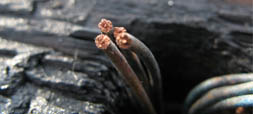
Dr. Mark Svare: That's a great point. So the first and foremost is electrical safety and that everybody should be working with the understanding that the electrical circuitry is energized until proven otherwise and that electricity can be extremely dangerous. And so we certainly ... For anybody listening to this program is that electrical safety and all safety procedures are first and paramount. But once you secure the electrical system, once it becomes de-energized, then we're going to evaluate it. If you're an untrained investigator, I recommend that you seek trained assistance or help. I'm not saying that you have to be an electrical engineer to do this methodology, but it does require an understanding and training with regard to electrical systems, electrical distribution, overcurrent protection. Of course, as I've already mentioned, the electrical safety aspect of it. But then not only that, but understanding that the damage that occurs from heat and flame impingement and/or short circuit analysis, even that part of it's not even taught at a university level. So then even for my research, I brought in trained metallurgist as well as materials personnel to get information from another skillset to understand that we're looking for these beads. And then when I say bead, it's an artifact that's developed from an electrical arc that melted the conductor and then left behind this physical evidence to be found. We call it a bead. Versus a globule that's a mass that is generated from exceeding the melting temperature, whatever the base material is, whether it's copper, aluminum or whatever the conductor or material that were under investigation. But we were bringing in all these different pieces of knowledge that we should have some fundamental basis, whether it's first electrical safety, then electrical distribution, and then also have a understanding of materials, melting points, temperatures, and things like that so that we can evaluate. And so, yes, it does require some background and training of which part of my doctoral research was is that I put on a ... I should say we put on, because I had several instructors that assisted me. We put on a 40-hour course as part of my research with students. It was a multi-port where it was the first part of the course, first half of the course in this 40-hour program was the fundamentals of electricity. Taking all the students from safety all the way up to distribution over current protection and those things. And then the last two days of the program, the 16 hours, was advanced topics for how to analyze or utilize the damage that's observed or lack of damage that's observed on these electrical circuits, how we could apply those to the investigation so that we can now have this origin based on this methodology, whether we're calling it arc survey or an electrical survey arc fault evaluation.

So, if anything, the fundamentals requires the fundamental electricity. You have to understand the system you're working on. Systems within a residential property are vastly different than those in a commercial, industrial and the hazards are different, and so it's ongoing training and understanding of all those systems. So if somebody was looking at the beginning, first if you don't feel comfortable, seek help and get assistance. And there's people and other investigators and engineers that may possess that training that can assist them and/or just go get vocational training, and then get ... There's a lot of electrical programs. There's CFITrainer programming that gets you started as well as vocational programs for fundamentals electricity and things like that for electrical distribution that could assist the investigator to reliably use this methodology for origin determination.

Rod Ammon: While you're talking about all that, I'm thinking, let's say I'm a newer fire investigator or I'm somebody who just hasn't come to a fire that I thought may have started through electrical energy. And I'm thinking what I saw in that arc mapping work or arc surveying work where they lifted up a drop ceiling or something and there was some wiring there and conduit. And I think at one point, and I'm probably not saying it in the right order, but I saw beading. And I'm like, "Wow. What if a fire investigator walks in and sees this and they've listened and they've got enough knowledge just to know that could mean something." What are some of the things they definitely shouldn't do?

Dr. Mark Svare: Well, first and foremost, electrical safety-

Rod Ammon: Yep.

Dr. Mark Svare: ... and make sure that everything's de-energized before we touch or work or analyze anything. And also remember that this is also physical evidence, so it may have some evidentiary value. But the methodology where regardless of who's applying the methodology is first is the understanding that this methodology is an origin determination methodology. I've been in some very large losses in my career where the loss may include millions of square feet, and sometimes we need to use methods and procedures, especially within the electrical system, as well as other fire investigative methods and procedures, to assist us on how we can collapse that scene down and get it to a manageable size based on physical evidence, data, empirical data, observations, eyewitness accounts, fact witness, whatever it may be to collapse that scene down to make it more manageable in which we can investigate it.

Regardless if it's a residential property all the way to the largest industrial property, the idea is to first come up with the origin of the fire, and can we collapse that down based on all these different factors that we consider for origin determination, of which one of them is the electrical system? And then from that, remember, if we do find that bead or we're finding the arc, and we now have to then go into the evaluation phase of, okay, I have this physical artifact. What does it mean? Is this something that's giving us information about the sequence of events? Is this something where fire first detected? The information or data that we're considering, does it line up with all the other data that we have? And so then from that, do we need to expand our area of origin? Or can we collapse our area of origin to a smaller area in which then we can start the phase of where we're feeling like, okay, as the investigative team or that we can ... Or the investigator then can determine, okay, now I have this area of origin, which I then can start processing to understand ... Now we're going into the causation phase, and now we're still doing this stepping stone investigation. We're finding the origin. We're trying to get it down to a classible size. And then from that, we begin our processing phase with regard to cause and then ultimately point of origin depending on where we're going with the investigation. So it's a multistep process.

Rod Ammon: Yeah.

Dr. Mark Svare: I think anything that the investigators, which ... Where the 2018 paper brought to light was that investigators looking at a pattern or trying to observe just a pattern and not fully understanding the science and electrical science and electrical distribution procedures involved of this artifact that they may find, whether it's a bead or a globule or melt or whatever. Just finding that pattern doesn't necessarily say, "Here I am. This is it." You need to evaluate that with the whole system, electrical system to ensure that you have the right area of origin in which you're going to begin processing. So just finding ... I mean, one piece of artifact or one damage area may be all that's necessary based on the electrical distribution or the damage to the electrical system, but there may be ... In other cases that I've had, there might be multiple areas in which give you a boundary or a bounded area in which you want to work in. So it's a multistep process, and it can take a significant amount of time depending on the type of loss it is.

Rod Ammon: So you started off talking about electric safety, and believe me, I'm certainly not the one to help people with that because I've been jolted a couple times myself. And I know it can get very, very serious, especially in the commercial buildings you're talking about, but one of the things that's interesting to me is preserving the scene and still having electrical safety. So, for instance, one of the first points I had here in my notes is, "Don't shut breakers off," but you certainly want to make sure there's no power in the building, right? So could you talk about some of those quick hints that might help you preserve the scene but also preserve your ability to do more analysis?

Dr. Mark Svare: Well, and you're absolutely right. It depends on the property and the type of damage of the fire scene. Ultimately, we want to ensure that the electrical circuits under investigation are rendered safe, de-energized. That can happen from a multitude of different steps, including one being the utility has removed or turned off or removed the service connection, electrical service connection of the structure. Two, yes, a lot of times we arrive and somebody has come in and turned off all the breakers in an effort to de-energize all the circuits. Of course, that was usually done in an effort to de-energize the rest of the property. A lot of times that removes an opportunity to see trip breakers and other physical evidence that may be important.

However, what I'm seeing a lot in the field is that fire investigators that are getting to the scene early or even the public firefighters that are on site, they are either just turning off the main breaker or they're having the utility [inaudible 00:34:39] just de-energize the structure, and then they're photographing the electrical panels and equipment in its post-incident condition, so we get an opportunity to see what condition they were before things are altered. So if anything is ... While we're doing the steps for safety and ensuring, also, we want to preserve evidence. We're also documenting as we're going along. So as long as we can document and in conjunction with our safety protocols, that certainly is helpful. Especially for an evidentiary consideration later on if we're trying to understand how the electric system, what role, if any, it may have had in the loss.

But there again, yes, safety is paramount, and there's different methods that are being utilized in different areas all over North America depending on the fire departments that are responding. I've seen everything from their wait till the utility comes and turns out the power of the transformer versus that ... Just their method is that they go in and they just turn off all the circuit breakers. But if we can document and we can at least have that information, that certainly helps the later on or the other subsequent investigation teams when they come in to ... Will help them understand what's going on with the electrical system so we can reconstruct it to determine what role, if any, it had in the fire. Or laws, whatever the laws might be.

Rod Ammon: So just to wrap this up, I mean, the best case scenario is the property is de-energized by some professionals so that the entire property and the breakers are left alone and documented.

Dr. Mark Svare: [inaudible 00:36:06]-

Rod Ammon: Best case?

Dr. Mark Svare: Well, it depends on the ... Well, I have to say it depends.

Rod Ammon: Okay.

Dr. Mark Svare: Because many times I arrive on the properties and there's only a small portion of the property that has been fire affected or damaged from the event, and so the owner or operator is trying to get the other parts of the building or structure energized and operating. And so it becomes down to a case-by-case basis. I mean, first of all, like I said, first of all, we want to make sure we're safe and make sure that all the investigative personnel are safe and make sure we're testing and we understand that the circuits are de-energized and they're not going to be working on them energized. Unless, of course, you have a trained professional that is trained to do that type of work, of which I am, but I have special equipment and PPE that I wear in those events.

But if you get the fire affected areas de-energized, the ... Ensure they're de-energized. We do lockout/tagout. We tag out the systems. We ensure that nobody can inadvertently turn things back on, and then we go through the procedures that are within the electrical safety training. Of which a lot of these training programs are within the fire investigators HAZWOPER programs or electrical safety programs that are part of their regular training. But if we're following these procedures and being safety first, and then from that, evaluating the electrical system non-destructively first. Getting photographs, documenting what it is, and then trying to understand what the electrical system ... The damage to the electric system, what exactly that means and how we can evaluate that and then understand what role, if any, it had in the loss.

Rod Ammon: So tell me a story. Do you have a case study or two you can share about how arc surveying contributed to hypothesis testing and origin and cause determination?

Dr. Mark Svare: Yeah. So, sir, I could tell you that happens weekly. I've had a couple this week, this last week where we did the electrical survey and looked at the arc sites and came up with the sequence of events. We do hypothesis testing because the system's responding. Remember, it's an unbiased witness to the event. Many times we'll get it right down to ... We'll have an origin, and it's the origin of fire and then we have to go into the causation phase. So the system's effective. It works well. Probably one of the biggest ones that I remember for brings in both a safety component as well as the electrical is I did a very large warehouse back in the mid-1990s. It was a very large event. It was a distribution facility, and I arrived on the site 10 days after the initial event.

There had been two fires in the structure, and this building was completely on the ground, and this was going to be a lengthy investigation and reconstructing the electrical system and understanding how [inaudible 00:38:58]. Surprisingly, to me, I was told by everybody ... There was a lot of public sector and private sector individuals on site, and I was told repeatedly that the building ... Not only had the water been secured, but the electrical systems had been secured and everything was rendered safe and that it was ready for investigation. Unbeknownst to me, I go inside the structure. I'm going through this facility. It is hundreds of thousands of square feet in size. And come to find out, to make a long story short, no, the electrical system hadn't been secured. The building was still energized.

I was climbing into equipment and about ready to do work that would've shorted out and probably not only killed myself, but a multitude of other people. I stopped before that, before I was going to do any work. Before I was going to touch any equipment, I went and got my test equipment, went back in. Even though everybody's telling me, "It's safe. Don't worry about. It's all done," go back, got my test equipment. Then tested it, and sure enough, I found that the structure was still energized. And then from that allowed us to develop ... Because everybody thought it had been de-energized, but it allowed us to put together and understand the electrical system, the sequence of event, and how the building had been re-energized led to understanding what the cause of that loss was. So that was a two-part one. I will tell you, it made me physically sick because I didn't believe my meter when I was telling me that the building was still ... It was energized. But also from that, I was learning that don't take anybody else's word for it.

We're responsible for our own safety, especially when it comes with electricity. Can't see it. Can't smell it. And sometimes we got to get our test equipment. We have to understand that to make sure that we're doing our work safely before we do go in and want to fully evaluate what's [inaudible 00:40:44] electrical system. So that's probably one of the ones I take away and still to this day reminds me that even though I was a trained electrician with my father and my brother's also electrician, we didn't rely on each other for our safety. We independently do our own safety check to make sure that we're being safe in what we're doing.

Rod Ammon: Good story to carry with you. Can you talk about a case in Wyoming? Something that ... The way I had in my notes here, it affirmed the validity of arc surveying when it was done properly.

Dr. Mark Svare: There was a recent case in the United States District Court in Wyoming. The question came up with regard ... Within the litigation, there was a question with regard to arc mapping and the usage of the electrical system for origin determination. Really what came out of it, so the decision with regard to ... Because there was challenges brought against the consultants about whether or not the validity of the methodology for utilizing the electrical system. But really what it came down to is not so much a name or imprinting a name for what the methodology was, but what came down, what the court had come down to, the trier of fact that came back and said, "Look, based on knowledge, skill, experience, training, and education and analyzing the expert scientific, technical or specialized knowledge, whether or not they had sufficient data, facts, was reliable principles and methods."

And from that, the methodology that was being performed to use the electrical system to determine whether or not the fire had originated in two different areas in this particular case, at the end of the day, the court had affirmed that the work that had been performed by using the methodology using the electrical system as it was performed by the individuals in the case, they were not excluded from their testimony. And so the methodology, that's why putting terms or giving it a specific name, whether it's arc survey, arc mapping, I think arc mapping has been replaced and rightly so to arc survey. Arc mapping kind of led investigators to believe that if I just find these beads or if I find these globules, then that's going to tell me a story without actually understanding or doing a survey or analysis of the electrical system. But I think the Wyoming case, as well as others that have been heard around the United States, the idea that long as the methodology is sound and it's being applied appropriately with an individual that has sufficient knowledge, skill, experience, training, and education, that their investigation is going to withstand the test of time.

Rod Ammon: I guess just as a start, you want to make sure you're trying to keep up with 1033 NFPA [inaudible 00:43:33]-

Dr. Mark Svare: Well, especially on the fire investigation side, but I think also ... The fire investigators certainly, but remember there's also electrical engineers that are being challenged for this methodology as well.

Rod Ammon: Sure.

Dr. Mark Svare: And so just because the method in itself of using the electrical system has been brought into question and that we need to remain diligent within our profession, whether you're a fire investigator or a forensic electrical engineer, is that we are following the scientific method. We're evaluating using empirical data, and that we are meeting all the check marks to make sure that we have reliable conclusions for our investigations.

Rod Ammon: So since most of our audience is fire investigators, can we, before we wrap up, circle back to 921 and talk about the evolution of how important document was presented arc mapping and surveying?

Dr. Mark Svare: Yeah. Certainly. So if you go back to the beginning of time, NFPA had a document that was called 907M, which was for electrical. It was a document for electrical investigations. When 921 came out in ... Or, excuse me, 1992, 907M, the electrical version of the investigation was adopted into the first version of 921. It wasn't until the early 2000s, I think it was ... My recollection was like 2001 is when arc mapping and arc surveying shows up in 921, and it was also added as one of the methods to perform for origin determination all the way through 2017. When the 2017 ... When the critical review paper came out, it brought into question with regard to arc mapping and how it's being used and its reliability. By the 2021 version, arc mapping had been removed from origin determination, one of the four steps, but the methodology had been moved into ... Even though it's an electrical method, it was moved into patterns within the pattern chapter. My recollection, I think that was chapter six within 921, and that's where it still remains today.

So the fire investigation community uses it as a pattern. I will tell you that trained electrical personnel, it's more than a pattern to us. We do the electrical evaluation. We do an analysis, and we understand how the electrical system responded and may have generated this arc bead or globule may have been generated from heat and flame, which within the fire investigation community could be interpreted as a pattern, but we're taking it further and evaluating independently the electrical system of how that artifact was generated. And from that, can we get meaningful information not only for hypothesis testing, but also understanding a sequence of events, and therefore ultimately what role, if any, the electrical system had in the event or the fire under investigation? So the whole thing with it being moved into patterns should be for fire investigation. There again, it goes back to the training and what your role and what your experience is in electrical system. But depending on your level of training, you would interpret that empirical data observed on electrical system differently based on your knowledge and your experience.

Rod Ammon: Okay. So my last question is, what should fire investigators listening to this podcast who want to know more about arc surveying do to learn?

Dr. Mark Svare: As I previously mentioned, first and foremost, go out and get electrical training, vocational training, adult learning. Start with CFITrainer modules on electricity as well as I think one of the original arc mapping videos is still out there. But putting that into context that things have changed and evolved since that original video, and then staying in step with the latest research and papers. I have a couple papers out. I did a presentation. I have two papers out with the National Academy of Forensic Engineers as well as the International Symposium on Fire Investigation from 2024. You could read about those things, but then also keep up ... There's more programs, fundamental electrical and other electrical programs that are being taught by the IAAI and other organizations that could assist them. And lastly, if you need assistance or help, contact a local consultant, electrical consultant, electrician, or somebody that can assist you on some of these investigations that may help you not only with the safety aspect, but also for the evaluation on the electrical system.

Rod Ammon: Thank you, Dr. Svare. It's interesting to talk to you about the evolution of this, and it's been around a lot longer than I knew. I thought it was this hip new thing back, what? 15, 20 years ago when I learned about it. And it's also been fascinating to learn about the science behind it. We appreciate your expertise and your time.

Dr. Mark Svare: Oh, my pleasure.

Rod Ammon: I hope you have a great rest of 2026. And once again, on behalf of the IAAI and all the fire investigators out there, we're grateful for your time.

Dr. Mark Svare: Oh, thank you. Have a great day.

Rod Ammon: You too. This IAAI CFITrainer.Net podcast is brought to you by the International Association of Arson Investigators and is made possible with funding provided by the Fire Prevention and Safety Grant from the Assistance to Firefighters Grant Program administered by the Federal Emergency Management Agency of the US Department of Homeland Security. Support also comes from the global IAAI membership network, the Bureau of Alcohol, Tobacco, Firearms and Explosives, strategic partners, and voluntary online donations from CFITrainer.Net users and podcast listeners. Thanks for joining us today on the podcast. Stay safe. We'll see you next month for the International Association of Arson Investigators and CFITrainer.Net. I'm Rod Ammon.

2026
Heavy Machinery Fires With Belinda Jones - Our guest today specializes in heavy machinery fires, principally mining machines, and she has some wild stories and crucial takeaways from these complicated cases that are applicable to fire investigations of all types.
ITC Preview with President David Bridges - ITC Preview with President David Bridges
Large Compartment Fire Dynamics With Michael Rushton - With us today is Michael Rushton, a Professional Engineer and Certified Fire and Explosion Investigator with over 15 years of public and private fire investigation experience.
Marine Fires with Adam Holloway - Today, we’re diving into marine fire investigation with Adam Holloway. Some pretty high profile incidents have been in the news, including the line-of-duty deaths of two Newark, NJ Fire Department firefighters aboard a docked cargo ship loaded with over a thousand vehicles and eleven people hospitalized for smoke inhalation when a fan on a Navy ship malfunctioned.
Fire Fatality Stories with Dr. Elayne Pope - Dr. Pope is here to share cases in which fire effects, patterns, and evidence associated with human bodies made a critical difference in origin and cause determination.
IAAI ITC 2025 Preview with Trace Lawless - IAAI ITC 2025 PREVIEW WITH TRACE LAWLESS
Fire Investigator Behavioral Health with Captain Michael Brewer - What can fire investigators do to help themselves and each other stay mentally healthy given the difficult and sometimes emotionally challenging work they do?
IAAI Investigator of the Year Case Study - This month, the CFITrainer.Net podcast welcomes Captain Chase Hawthorne of the Louisiana Office of State Fire Marshal to talk about the bizarre case that won him the 2024 IAAI Investigator of the Year Award.
News Roundup: March 2024 - News Roundup - March 2024
Discussing Mentorship from Both the Mentor and Mentee Perspectives with Steve Avato - We discuss mentorship, from both the mentor and mentee perspectives, with Steve Avato, retired ATF Supervisory Special Agent CFI and Fire Marshal Captain with the Loudoun County Virginia Fire Marshal’s Office.
A CONVERSATION WITH SPECIAL AGENT ADAM ST. JOHN AND CAPTAIN CRAIG MATTHEWS - Today, we’re taking a deep dive into fires where the ignition was associated with CSST — that’s corrugated stainless steel tubing.
Laboratory Analysis of Fatty Acids, Oils, and Alcohols with Laurel Mason and Doug Byron - Today, we’re talking about using a lab in your investigations. More specifically, we are going to talk to two experienced forensic scientists about analysis of fatty acids, oils, and alcohols.
The Role of Metallurgical and Materials Science in Fire Origin and Cause Determination. - We’ve got something new and pretty interesting for you today — a closer look at the role of metallurgical and materials science in fire origin and cause determination. Our guide into this world is Larry Hanke.
What's new at the National Fire Academy - A conversation with Kevin Oliver on what’s new at the National Fire Academy.
2022 IAAI Investigator of the Year - Today we're talking with Fire Arson Investigator Nicole Brewer of Portland Fire and Rescue in Oregon. Investigator Brewer was named the IAAI Investigator of the Year in 2022
Multi Unit Multi Fatality Fires - This month, we’re tackling a tough topic on the CFITrainer.Net podcast.
NFPA 1321 is coming in 2023. Are you ready? December 2022 - In 2023, NFPA will release a new standard, NFPA 1321: Standard for Fire Investigation Units. We preview this standard on the newest episode of the CFITrainer.Net podcast.
Spoliation: What You Don't Know Can Jeopardize Your Investigation November 2022 - Attorney Chris Konzelmann Discusses Lessons Learned from Recent Litigation
The Internet of Things: September 2022 - Welcome to the CFITrainer.Net podcast. Today, we're talking about the Internet of Things. You're going to learn what that is and why it's an important investigative tool you might not be using.
News Roundup: July 2022 - This month on a new episode of the CFITrainer.Net podcast, we’re talking about fascinating news that’s crossed our feed recently.
June 2022 - On this month’s CFITrainer.Net podcast, we're going to get into an issue that seems to be increasing in regularity, and that's warehouse fires.
Fire Investigator Health and Safety: March 2022 - This month on a new episode of the CFITrainer.Net podcast, Dr. Gavin Horn, Research Engineer at UL's Fire Safety Research Institute, and Jeff Pauley, Chair of the IAAI’s Health & Safety Committee, discuss the latest research on fire investigator health and safety.
NFPA 1321: New NFPA Standard Affecting Fire Investigation Units: January 2022 - On this month’s CFITrainer.Net podcast, we talk with Randy Watson, chair of the technical committee for NFPA 1321: Standard for Fire Investigation Units.
December 2021 - On this month’s CFITrainer.Net podcast, we look back at 2021 and how CFITrainer.Net evolved to meet the challenges of the COVID-19 pandemic and rapidly changing technology.
October 2021 - Welcome to the CFITrainer.Net Podcast. It's been a while since we've done a news round up so today we're covering some new research and fire investigation cases.
Fire as a Cover for Murders and Gender Reveal Fires: September 2021 - This episode we talk to Texas Ranger Sergeant Drew Pilkington about incendiary fires as a cover for murder and we discuss a tragic quadruple domestic violence homicide.
May 2021 - As part of National Arson Awareness Week, CFITrainer.Net has a new podcast exploring the week's theme, "Arson During Civil Unrest."
December 2020 - On this podcast we talk to Bobby Schaal about the new Fire Investigation for Fire Officer certificate and then we offer a brief update on an investigation in Stowe, Vermont.
August 2020 - This month we talk to a legend in the fire investigation field, Dr. Quintiere, sometimes known as Dr. Q. He has a rich experience in the fire service dating back to the 70’s, and he is working on fire in micro-gravity today.
July 2020 - July '20 IAAI & CFITrainer Fire Investigator Podcasts. In this new episode of the CFITrainer.Net podcast, Scott Bennett, talks about the fascinating case he and Mark Shockman worked that won them the IAAI Investigator of the Year Award. You won't want to miss our conversation. And, new IAAI President Rick Jones stops by to discuss what he is excited about for IAAI's growth this coming year — there are a lot of innovative and valuable initiatives on the way.
June 2020 - June '20 IAAI & CFITrainer Fire Investigator Podcasts. In this month's podcast we interview Doug Byron, President and Senior Forensic Chemist from the FAST lab about fats and oils and spontaneous combustion, and how they are involved in fire investigation. After our interview with Doug, we offer some thoughts on your job and the COVID-19 situation.
May 2020 - May '20 IAAI & CFITrainer Fire Investigator Podcasts. Join us this month for a new podcast where we talk briefly about online learning that is available and then we speak with Dr. Peter Mansi, Past President of the IAAI.
April 2020 - April '20 IAAI & CFITrainer Fire Investigator Podcasts. This month on the Podcast we interview President Barry M. Grimm from the IAAI and talk to Wayne Miller, Author of "Burn Boston Burn -The largest arson case in the history of the country.
March 2020 - March '20 IAAI & CFITrainer Fire Investigator Podcasts. This month on the Podcast we talk about some resources for COVID, updates from the IAAI and talk with a fire Marshall in New Hampshire about challenges in their region related to Sober Homes.
February 2020 - February '20 IAAI & CFITrainer Fire Investigator Podcasts. This month’s podcast follows along with our technology theme. We look at social media’s effect on some fire investigations and then we talk with Mike Parker about his work with social media while at the LA County Sheriff’s Department.
January 2020 - January '20 IAAI & CFITrainer Fire Investigator Podcasts. This month’s podcast gives you updates on Australia’s wild fires and an investigation and arrest tied to a large New Jersey fire. We also talk with Zach McCune from Rolfe’s Henry about a case study and course that he and Shane Otto will be leading at ITC this year. Zach talks about an arson fraud case and how spoofing and masking technologies were used to frame an innocent mother and perpetuate an arson fraud.
December 2019 - December '19 IAAI & CFITrainer Fire Investigator Podcasts. In under ten minutes this podcast offers a review of 2019 milestones and new content and features that you might have missed. We also give you a quick preview of what to expect in 2020.
November 2019 Podcast - November '19 IAAI & CFITrainer Fire Investigator Podcasts. This month we learn about two new technology solutions being studied for fire investigation and then we visit with Lester Rich from the National Fire Academy
October 2019 Podcast - October '19 IAAI & CFITrainer Fire Investigator Podcasts. In this podcast episode, we’re back for the second part of the CCAI live burn training event — the actual burn and post-fire.
September 2019 Podcast - September '19 IAAI & CFITrainer Fire Investigator Podcasts. This month we travel to San Luis Obispo where we were hosted by the California chapter of the IAAI (CCAI). We had a rare opportunity to experience what it’s like to set up this training and experience a wildland burn in California. There was a lot to learn!
August 2019 Podcast - August '19 IAAI & CFITrainer Fire Investigator Podcasts. This month's CFITrainer.Net podcast is under 15 minutes and offers information about fires in electric vehicles and what you need to know.
May 2019 Podcast - May '19 IAAI & CFITrainer Fire Investigator Podcasts. In this month's CFITrainer.Net podcast, you'll hear from ATF Special Agent Chad Campanell, who will discuss how ATF can assist state and local fire investigators with training and investigations, ATF resources available to fire investigators, and ATF's support of CFITrainer.Net. Also, we summarize the final report of a multi-fatality fire at a senior living community in Pennsylvania, where ATF cooperated with state and local investigators to reach conclusions.
April 2019 Podcast - April '19 IAAI & CFITrainer Fire Investigator Podcasts. There are two new additions to CFITrainer.Net! A new podcast with Dan Madrzykowski from UL speaking about ventilation and Fire Flow, and a new module called “Fire Flow Analysis”.
March 2019 Podcast - March '19 IAAI & CFITrainer Fire Investigator Podcasts. This month's podcast includes updates from the IAAI related to the election, the upcoming ITC, and a new website specifically about evidence collection. After the updates, you will also hear some news stories related to fire investigation.
February 2019 Podcast - February '19 IAAI & CFITrainer Fire Investigator Podcasts. This month take 10 mins and hear some fire investigation and IAAI news.
January 2019 Podcast - January '19 IAAI & CFITrainer Fire Investigator Podcasts. This month we’re looking back on some of the biggest issues in fire investigation in 2018.
November 2018 Podcast - November '18 IAAI & CFITrainer Fire Investigator Podcasts. This month we talk with Jeff Pauley from the IAAI’s Health and Safety Committee. Jeff is an IAAI-CFI and the Chairman of the Health and Safety Committee. In this podcast, he talks about ways to reduce exposure to carcinogens related to fire investigation. By listening, you will learn about ways to reduce your risks, learn about new resources that are available to assist you, and research that is coming soon.
October 2018 Podcast - October '18 IAAI & CFITrainer Fire Investigator Podcasts. This month meet and learn about IAAI’s new Executive Director, Scott Stephens and plans for the future. After that interview, hear some wild stories from the national news related to fire investigation.
September 2018 News Roundup - September '18 IAAI & CFITrainer Fire Investigator Podcasts.
Short stories related to fire investigation - June '18 IAAI & CFITrainer Fire Investigator Podcasts. Join us for a brief Podcast that includes five minutes of short stories related to fire investigation.
What you need to know about Arson Awareness week - April '18 IAAI & CFITrainer Fire Investigator Podcasts. This month we welcome Tonya Hoover, the Superintendent of the National Fire Academy. Superintendent Hoover came to the NFA with more than 20 years of experience in local and state government, most recently as the California State Fire Marshal.
Growing pot and earning Bitcoin can start fires? - March '18 IAAI & CFITrainer Fire Investigator Podcasts. In this month’s podcast, hear a story about how the Bitcoin business might be causing fires? What similarities are there between Pot growers and now Bitcoin miners?
Training related to wildland fire investigation - February '18 IAAI & CFITrainer Fire Investigator Podcasts. This month’s podcast highlights new training related to wildland fire investigation featuring an interview with Paul Way, and this year’s International Training Conference. We also have a pretty wild story before we wrap up. Birds starting fires?
Smart homes and digital data gathering issues - December '17 IAAI & CFITrainer Fire Investigator Podcasts. In this podcast, we discuss two topics on the technology and forensics cutting edge. Michael Custer of Kilgore Engineering, Inc. and retired Special Agent Tully Kessler share some knowledge and give us a taste of the classes that they will be presenting at ITC 2018.
Discussion with Writer Monica Hesse - September '17 IAAI & CFITrainer Fire Investigator Podcasts. In this podcast, you will hear some great news related to the IAAI and CFITrainer.Net and then we have an interview with Monica Hesse, the writer of a new book called "American Fire: Love, Arson, and Life in a Vanishing Land."
Discussion with Criminalist- John DeHaan - June '17 IAAI & CFITrainer Fire Investigator Podcasts. This month on the CFITrainer.Net podcast, we talk to Criminalist, fire investigation expert and Author of "Kirk’s Fire Investigation", John DeHaan.
The Ghost Ship - May '17 IAAI & CFITrainer Fire Investigator Podcasts. For this podcast, we hear from a retired Captain of the Long Beach Fire Department, Pat Wills. Pat has been in the fire service for 37 years. He has been a leader and an investigator, now he is an educator speaking around the country about the importance of code enforcement.
Fast Podcast about ITC! - March '17 IAAI & CFITrainer Fire Investigator Podcasts. This month we talk to David Bridges about what to expect at ITC and the training you won’t want to miss.
CFITrainer Podcast- A profile with an IAAI-CFI® - February '17 IAAI & CFITrainer Fire Investigator Podcasts. Join us this month for our podcast as we interview IAAI member and CFI, Jeff Spaulding from Middletown, Ohio. Jeff talks about his work in both the public and private sector and then he shares an interesting story about how a pacemaker is helping in an investigation.
An interview with Dr. James Quintiere - December '16 IAAI & CFITrainer Fire Investigator Podcasts. In a discussion with Dr. James Quintiere, we learn about some of his work in fire sciences, a bit about his research, his opinions related to the World Trade Center investigation and what he thinks is important to fire investigation as a scholarly leader in our field.
Fire Investigation After the Flood Podcast - November '16 IAAI & CFITrainer Fire Investigator Podcasts. This month we talk to Dan Hebert, an IAAI, CFI about "How Floods affect Fire Investigation."
September 2016 CFITrainer.Net Podcast - September '16 IAAI & CFITrainer Fire Investigator Podcasts. This month we talk about the recent changes in the FAA's regulations for commercial and public sector use of UAS or "Drones".
August 2016 CFITrainer.Net Podcast - August '16 IAAI & CFITrainer Fire Investigator Podcasts. This month we talk to Jessica Gotthold about the Seaside Heights fire in NJ from 2013
July 2016 CFITrainer.Net Podcast - July '16 IAAI & CFITrainer Fire Investigator Podcasts. This month we talk to Fire Marshall, Ken Helms of the Enid, OK. Fire Department about his team winning the Fire Investigator of the Year award.
March 2016 CFITrainer.Net Podcast - March '16 IAAI & CFITrainer Fire Investigator Podcasts. This month's fire investigation podcast from the IAAI's CFITrainer.Net focuses on the Youth Firesetting Information Repository and Evaluation System, which is called YFIRES for short.
February 2016 CFITrainer.Net Podcast - February '16 IAAI & CFITrainer Fire Investigator Podcasts. This month's fire investigation podcast from the IAAI's CFITrainer.Net focuses on what you need to do to ensure the integrity of samples sent to the lab. A conversation with Laurel Mason of Analytical Forensic Associates.
September 2015 CFITrainer.Net Podcast - September '15 IAAI & CFITrainer Fire Investigator Podcasts. Our podcast related to the legalization of recreational marijuana and its effect on fire investigation was one of the most popular podcasts ever on CFITrainer.Net. This month’s podcast is a follow up with one of our listeners from California who is an investigator doing training on this very topic.
August 2015 CFITrainer.Net Podcast - August '15 IAAI & CFITrainer Fire Investigator Podcasts. This month's podcast is about NFIRS where we interview the Executive Director of The National Association of State Fire Marshals Fire Research and Education Foundation, Jim Narva.
July 2015 CFITrainer.Net Podcast - July '15 IAAI & CFITrainer Fire Investigator Podcasts. In this special edition of podcast we’re going to meet the newest IAAI Investigator of the Year, Andrea Buchanan.
May 2015 CFITrainer.Net Podcast - May '15 IAAI & CFITrainer Fire Investigator Podcasts. This month's Arson Investigator podcast from IAAI & CFITrainer interviews Jason McPherson from MSD Engineering to talk about some of these new technology tools.
April 2015 CFITrainer.Net Podcast - April '15 IAAI & CFITrainer Fire Investigator Podcasts. This month's Arson Investigator podcast from IAAI & CFITrainer interviews Dave Perry, a lawyer in Colorado discussing what fire chiefs, fire investigators, and the legal system are seeing in a state with legalized cannabis in regard to fire cause involving marijuana.
February 2015 CFITrainer.Net Podcast - Feb '15 IAAI & CFITrainer Fire Investigator Podcasts. This month's Arson Investigator podcast from IAAI & CFITrainer interviews Mike Schlatman and Steve Carman who are both successful fire investigators and now business owners who have transitioned from the public to the private sector.
December 2014 CFITrainer.Net Podcast - December '14 IAAI & CFITrainer Fire Investigator Podcasts. This month's podcast interviews Steve Avato from the Bureau of Alcohol, Tobacco, Firearms and Explosives explaining the process of elimination and how it is a critical part of the scientific method.
June 2014 CFITrainer.Net Podcast - June '14 IAAI & CFITrainer Fire Investigator Podcasts. This month's podcast interviews the 2014 Investigator of the Year.
April 2014 CFITrainer.Net Podcast - April '14 IAAI & CFITrainer Fire Investigator Podcasts. This month's podcast interviews with Don Robinson, Special Agent in Charge with the Bureau of Alcohol, Tobacco, Firearms and Explosives. Currently stationed at the National Center for Explosives Training and Research, located at the Redstone Arsenal in Huntsville, Alabama.
January 2014 CFITrainer.Net Podcast - January '14 IAAI & CFITrainer Fire Investigator Podcasts. This month's podcast takes a look inside the process of revising NFPA 921 and NFPA 1033.
October 2013 CFITrainer.Net Podcast - October '13 IAAI & CFITrainer Fire Investigator Podcasts. This month's podcast focuses on the fire research work of Underwriters’ Laboratories, better known as UL.
February 2013 CFITrainer.Net Podcast - February '13 IAAI & CFITrainer Fire Investigator Podcasts. This month we have an interview with George Codding who returned from a recent trip to Saipan and gives us a closer look at the international activities of the International Association of Arson Investigators
Mid Year 2012 CFITrainer.Net Podcast - Mid Year '12 IAAI & CFITrainer Fire Investigator Podcasts. This podcast features a mid-year update on the IAAI’s new initiatives and ways for you to get more involved with the organization.
September 2012 CFITrainer.Net Podcast - September '12 IAAI & CFITrainer Fire Investigator Podcasts. This month's podcast features an in-depth look at the recent live-burn fire experiments exercise conducted on Governor’s Island, New York by the New York City Fire Department, the National Institute of Standards and Technology, Underwriters Laboratory, and the Trust for Governor’s Island.
August 2012 CFITrainer.Net Podcast - August '12 IAAI & CFITrainer Fire Investigator Podcasts. This is a special edition of the CFITrainer.Net podcast previewing the ITC 2013. There’s a new name for the Annual Training Conference from the IAAI now called the International Training conference.
April 2012 CFITrainer.Net Podcast - April '12 IAAI & CFITrainer Fire Investigator Podcasts. This month's podcast features an interview with Chief Ernest Mitchell, Jr., the US Fire Administrator. Also we will discuss the upcoming ATC, Annual Training Conference, from the IAAI about to happen in Dover, Delaware.
March 2012 CFITrainer.Net Podcast - March '12 IAAI & CFITrainer Fire Investigator Podcasts. This month's podcast features an interview with ATF Special Agent Billy Malagassi out of the Tulsa, OK Field Office about investigating fires in clandestine drug labs. We also report on NIST’s findings in the Charleston Sofa Super Store fire and IAAI’s Evidence Collection Practicum.
December 2011 CFITrainer.Net Podcast - December '11 IAAI & CFITrainer Fire Investigator Podcasts. This month's podcast features one of the presenters from this year’s IAAI ATC and see how a single photo broke the Provo Tabernacle fire case.
October 2011 CFITrainer.Net Podcast - October '11 IAAI & CFITrainer Fire Investigator Podcasts. This month's podcast features an interview with Deborah Nietch, the new Executive Director of IAAI.
July 2011 CFITrainer.Net Podcast - July '11 IAAI & CFITrainer Fire Investigator Podcasts. This month's podcast features an interview with Tom Fee discussing details of investigating wildland fires.
June 2011 CFITrainer.Net Podcast - June '11 IAAI & CFITrainer Fire Investigator Podcasts. This month's podcast features a lot of exciting things that are happening at CFITrainer.Net
May 2011 CFITrainer.Net Podcast - May '11 IAAI & CFITrainer Fire Investigator Podcasts. This month highlights the IAAI ATC in Las Vegas and the third installment in the "It Could Happen to You" series.
ATC 2011 CFITrainer.Net Podcast - This podcast discusses the upcoming IAAI Annual Training Conference and National Arson Awareness Week.
April 2011 CFITrainer.Net Podcast - April '11 IAAI & CFITrainer Fire Investigator Podcasts. This podcast announces the release of the program, The First Responder’s Role in Fire Investigation, which teaches first responders how to make critical observations and take important scene preservation actions at a fire scene.
March 2011 CFITrainer.Net Podcast - March '11 IAAI & CFITrainer Fire Investigator Podcasts. This month’s podcast features some of the instructors from the upcoming 2011 Annual Training Conference, to provide a preview of the courses they will be presenting.
February 2011 CFITrainer.Net Podcast - February '11 IAAI & CFITrainer Fire Investigator Podcasts. This month’s podcast features an update on fire grants and an interview with Steve Austin
January 2011 CFITrainer.Net Podcast - January '11 IAAI & CFITrainer Fire Investigator Podcasts. This month’s podcast features the release of the new edition of Fire Investigator: Principles and Practice to NFPA 921 and 1033, new flammability requirements from UL for pre-lit artificial Christmas trees and a growing fire problem in Dubai with factories turned into worker dormitories.
December 2010 CFITrainer.Net Podcast - December '10 IAAI & CFITrainer Fire Investigator Podcasts. This month’s podcast focuses on home candle fires, lightning punctures in gas piping, and respiratory diseases in the fire services.
November 2010 CFITrainer.Net Podcast - November '10 IAAI & CFITrainer Fire Investigator Podcasts. This month’s podcast features research findings for structural stability in engineered lumber by UL, the ban on antifreeze in residential sprinkler systems, and the National Highway Traffic Safety Administration’s investigation of Jeep Grand Cherokee fuel tanks.
October 2010 CFITrainer.Net Podcast - October '10 IAAI & CFITrainer Fire Investigator Podcasts. This month’s podcast features high-profile fire cases, why people leave stovetop cooking unattended and how new sensors under development may improve fire research.
September 2010 CFITrainer.Net Podcast - September '10 IAAI & CFITrainer Fire Investigator Podcasts. This month’s podcast features how to use the ATF’s Bomb Arson Tracking System, IAAI Foundation grants, electrical fires and indoor marijuana cultivation.
August 2010 CFITrainer.Net Podcast - August '10 IAAI & CFITrainer Fire Investigator Podcasts. This month’s podcast focuses on social media as a fire investigation tool, a potential problem with modular home glued ceilings and research from Underwriters Laboratories on the effects of ventilation on structure fires.
July 2010 CFITrainer.Net Podcast - July '10 IAAI & CFITrainer Fire Investigator Podcasts. This month’s podcast is a roundtable on some of the latest research and technical activities that impact fire investigation, featuring Daniel Madrzykowski (moderator), Steven Kerber, and Dr. Fred Mowrer.
June 2010 CFITrainer.Net Podcast - June '10 IAAI & CFITrainer Fire Investigator Podcasts. This month’s podcast discusses career advancement, budget cuts and their impact on fire investigation, and the 2010-2016 ATF Strategic Plan.
ATC 2010 CFITrainer.Net Podcast - Follow-up and Interviews from Orlando. Learn about the conference, hear what attendees had to say.
May 2010 CFITrainer.Net Podcast - May '10 IAAI & CFITrainer Fire Investigator Podcasts. The second in our safety series called "It Could Happen To You." Our Long-Term Exposure roundtable is moderated by Robert Schaal.
April 2010 CFITrainer.Net Podcast - April '10 IAAI & CFITrainer Fire Investigator Podcasts. The first of our two-part safety series called "It Could Happen To You." Our roundtable is moderated by Robert Schaal.
March 2010 CFITrainer.Net Podcast - March '10 IAAI & CFITrainer Fire Investigator Podcasts. This month’s podcast features a conversation about legislative affairs affecting the fire service with Bill Webb, Executive Director of the Congressional Fire Services Research Institute.
February 2010 CFITrainer.Net Podcast - February '10 IAAI & CFITrainer Fire Investigator Podcasts. This month’s podcast features our interview with a commercial kitchen’s fire expert about what you need to know when you work a commercial kitchen fire.
January 2010 CFITrainer.Net Podcast - January '10 IAAI & CFITrainer Fire Investigator Podcasts. This month’s podcast features a look at preliminary research on corrosion caused by Chinese drywall, a new database focused on fires in historic buildings, a warning on blown-in insulation, and the launch of the new firearson.com web site.
December 2009 CFITrainer.Net Podcast - December '09 IAAI & CFITrainer Fire Investigator Podcasts. This month’s podcast features cooking fires, highlights of the International Code Council’s Annual Meeting on code requirements, including requiring residential sprinkler systems, and an easy way to keep up with recalls from the US Consumer Product Safety Commission.
November 2009 CFITrainer.Net Podcast - November '09 IAAI & CFITrainer Fire Investigator Podcasts. This month’s podcast features chimney fires, including recent news on surgical flash fires, a proposed national arsonist registry, lightning research and an innovation in personal protective equipment.
October 2009 CFITrainer.Net Podcast - October '09 IAAI & CFITrainer Fire Investigator Podcasts. This month’s podcast is devoted to Fire Prevention Week.
September 2009 CFITrainer.Net Podcast - September '09 IAAI & CFITrainer Fire Investigator Podcasts. This month’s podcast features the relationship between climate conditions and fire risk, new research on formulating fireproof walls and the latest in IAAI news.
August 2009 CFITrainer.Net Podcast - August '09 IAAI & CFITrainer Fire Investigator Podcasts. This month takes a look at the dangerous combination of summer heat and oily rags, the rise in vacant home fires, and preview research underway on Australia’s devastating "Black Saturday" brush fires.
July 2009 CFITrainer.Net Podcast - July '09 IAAI & CFITrainer Fire Investigator Podcasts. This month features a look at outdoor grill fires, a fatal fire at a homeless camp in Southern NJ, new NIST research on human behavior during building fires, and IAAI news.
June 2009 CFITrainer.Net Podcast - June '09 IAAI & CFITrainer Fire Investigator Podcasts. This month’s podcast features live reports from the 2009 IAAI Annual Training Conference held in May.
May 2009 CFITrainer.Net Podcast - May '09 IAAI & CFITrainer Fire Investigator Podcasts. This podcast is dedicated to National Arson Awareness Week.
April 2009 CFITrainer.Net Podcast - April '09 IAAI & CFITrainer Fire Investigator Podcasts. This month’s podcast features the NFPA 921 chapter on marine fire investigations and the myth and reality of static electricity as a source of ignition.
March 2009 CFITrainer.Net Podcast - March '09 IAAI & CFITrainer Fire Investigator Podcasts. This month focuses on the rise of the hybrid vehicle and what its unique engineering means for the investigation of vehicle fires, the rash of devastating arson fires in Coatesville, Pennsylvania from December 2008 to February 2009, and news from IAAI.
January 2009 CFITrainer.Net Podcast - January '09 IAAI & CFITrainer Fire Investigator Podcasts. This month’s podcast focuses on the deepening financial crisis in the US and arson for profit fires, how going green may pose a fire hazard and see how rope lighting may be a source of ignition, and IAAI’s Expert Witness Courtroom Testimony course.
December 2008 CFITrainer.Net Podcast - December '08 IAAI & CFITrainer Fire Investigator Podcasts. This month’s podcast features Christmas tree fires, changes to critical fire investigation publications, the weak economy’s impact on home fires, wind’s effect on structure fires, and ATC 2009.