CFITrainer.Net Podcast

The IAAI and CFITrainer.Net present these podcasts with a focus on issues relating to fire investigation. With expertise from around the world, the International Association of Arson Investigators produces these podcasts to bring more information and electronic media to fire investigators looking for training, education and general information about fire investigation. Topics include recent technologies, issues in the news, training opportunities, changes in laws and standards and any other topic that might be of interest to a fire investigator or industry professional affected by fire. Information is presented using a combination of original stories and interviews with scientists, leaders in fire investigation from the fire service and the law enforcement community.

Rod Ammon: Welcome to the IAAI CFITrainer.net podcast, a feature of the International Association of Arson Investigators' premier online learning network, CFITrainer.net. Most fire investigators are pretty familiar with vehicle fires, but most have never seen a vehicle fire like the ones we're going to talk about today, where the vehicle is worth $25 million and stands three stories high. Our guest today specializes in heavy machinery fires, principally mining machines, and she has some wild stories and crucial takeaways from these complicated cases that are applicable to fire investigations of all types. Belinda Jane Jones, known as BJ, is an IAAI-CFI and one of Australia's most seasoned fire investigators, specializing in mining machines and industrial equipment. She is the owner and managing director of Fire Forensics Proprietary Limited and has over two decades of frontline and forensic experience in residential, commercial, industrial, vehicle and machinery fires. BJ began her career as a scene of crime officer in the New South Wales Police Force. In that position, she discovered a love for forensic detail and the human stories behind every incident. Since becoming a fire investigator in 2007, she has built a private sector career working for major insurers and specialist consultancies investigating cases that unite her experience in forensics, psychological science and fire. She specializes in explaining how people, environments and science intersect to communicate how a fire happened and why. She's investigated heavy machinery fires around the world and managed complex investigations involving multiple interest parties and their investigators. Some of you may recognize her from IAAI ITC 2025, where she taught a popular class on heavy machinery fires. BJ, welcome to the podcast.

Belinda Jones: Hi.

Rod Ammon: Well, let's get right to it. This mining machines and industrial equipment fires is, well, to me, pretty niche. How did you get into that area of fire investigation?

Belinda Jones: When I started in the private sector, I was originally a consultant once I left. So I went from the police to an insurance company, and then I went private as a consultant or contractor and started working with a gentleman called Jim Monday. And he had a lot of contacts in the mining sector and did work in that space, so he effectively trained me up. But my training was sort of like I rode along with him for three jobs and then he just cut me loose and said, "Off you go." So I just had to improvise and learn on the job, effectively.

Rod Ammon: Wow, that's a big place to get cut loose, shall we say.

Belinda Jones: It kind of is. The mining sector's a bit different. It's sort of like you're not really doing it yourself, you've always got someone with you. There's always fitters and engineers and mechanics on site. And often if I don't know what's going on, it's just like I point at something and someone will tell me what's going on, so there was a lot of help. I just asked a lot of questions and got over the idea that I had to know everything. I just ask a lot of questions.

Rod Ammon: I think as all of us mature, we start to learn that there's more we don't know. You started to talk about it, so why don't you explain a bit about these investigations and what they're like in terms of the environment you're entering, the physical, social and political situations, and how that plays into the process of your investigations?

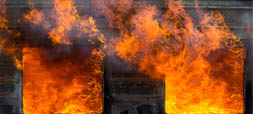
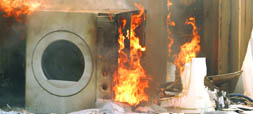
Belinda Jones: Sure. Well, I'll start in the Australian sector, and mining sector is different all around. For example, BHP, they might have five mines, but each mine is run as an individual business. They don't talk to each other, so I might work for five different mines, but they're all sort of the same company, but run individually. And then you go onsite and you can't go anywhere by yourself, usually escorted around. And you can ask for a lot of information. These machines are often running 24/7, so they have really good records on maintenance and often witness observations and operator. A lot of them are under operation at the time of the fires, so you've often got really good incipient stage information coming through. And once the fire has occurred, it depends how big the machine is. Because a truck, often when they burn, the tires, a truck is probably, maybe greater or something like that, but often they're big machines, they're really large machines. So usually where they burn, they burn and they stay there. So you have to go within the site, within the mine to wherever they are. And that can be a 15-minute car ride, it can be a 45-minute, one-hour journey into the actual mine to actually get to the site. And then often if they can be still burning because tires can burn for days, these tires are one story high and they're very expensive. And if they blow, the minute a tire becomes involved in an exclusion zone of 300 meters, or I'm not sure what that is in feet, there's a big exclusion zone put around because they blow off and they're very violent when they actually pop off. So if a tire's involved, usually they don't even try and put it out, they just let it burn. They're very expensive machines. They're usually probably $3 million to $5 million US for a big truck, and then they just get up to $20 million to $30 million for excavators and so forth, so there's a lot of value lost when there's a fire. And also, there's a time issue mainly because it's lost production. These machines are running 24/7 so if you lose a truck, it's not too bad. But if you lose an excavator, you lose a lot of production and the mines get very antsy over stuff like that. In Australia, it's easy enough to get another excavator. In Australia, we have all of the maintenance staff. They're usually apprentices and mechanics that are hired by the mine and they're trained up on site. And they work across all the different branded machines like Caterpillar, Hitachi and so forth, so they know all the machines inside and out. It's a bit different overseas, but generally you speak to a mechanic or a fitter in Australia and they'll know what's what on all of the machines, so lots of questions there. Once you've gotten to the site and you know a little bit about what's happened, it's generally like any other fire investigation. The course I did at the conference was about the similarities and differences between a structure fire or a vehicle fire and then a heavy machinery fire, so it's very similar. You do your perimeter walk, you do your gathering of information, and then it's sort of working through where the fire was first identified to identify a point of origin or an area of origin and a point of origin. That is all pretty much the same as what you would do on any other fire. The fuels are generally, you're limited. You've got coolant, hydraulic fluid, diesel fuel and so forth, so there's sort of limited fuels that you can deal with. That's generally well known, and you often have SDSs on those, on the machines. They'll tell you what they are. You can then just focus on the sequencing. And I think that's the biggest thing with, I think these machinery fires, because the machines are running so much, you can have a mechanic going, "Well, there wasn't a mechanical failure." And it's like, "Well, something's happened because you've had a fire." You can't have a fire without something going on. It sort of gets into the sequencing of the events, so performance issues, what was happening at the time. Often your excavator might be mid-swing and there's a big crunch, and then you've basically lost your planetary gears or something's caught up in the slew ring, which is a big, basically the ring on which the machine pivots. Things that happen might be immediate and then you see the fire, or it could be something that's happened over half an hour or a few minutes before, but then by the time the fire is identified, it's the first notification by the operator or a witness account might be there where they think the fire has started, but it started 20 minutes before, they just didn't know it. So a lot of what we do is sequencing, and that's probably the trickiest thing about it at this point.

Rod Ammon: Well, there's so much in what you just said. First of all, the remote locations just blow my mind. And to think about spending an hour getting in there, and then when you tell me that these things are sometimes burning when you get there, I mean, how do you deal with that? Do you have PPE? And then you said there's a huge exclusion zone. So give me an example or give us an example of showing up to one of these burning. And then you threw in the tires, basically being an explosion.

Belinda Jones: Once the tires are involved in fire, because they're massive pressurized things, if they blow off, they're fine, it's done. When they're burning for days, it's usually the tires that are burning for days. Literally, they're toxic, nasty bits that are just burning and smoldering for days. And the issue is that if you've then got a big truck, it sort of just sinks down into the ground and you can't actually get to the engine compartment because it sunk into the ground, so you have to wait for it to stop burning. So often, there can be a delay in getting on scene because if it's still burning, they don't want people to go there. The tires can still smolder for a while. And honestly, it's toxic smoke, so it's just masks, PPE effectively, and stay upwind of it if possible. But we don't do a lot of excavation on the machine until it's fully stopped burning. Depending on if it's an excavator or a truck, usually they stay in position. And in all honesty, after the investigation's complete, if it's been burning for days, they'll just literally push it over the edge of the road because the roads change all the time. Because they're sort of digging down, often these are open cut mines. I have done underground mines, but open cut mines, they're changing the roads all the time because they're blasting and pulling out the sides of the mine where they're actually working. So they'll just literally push the machine over the side and cover it up in spoil. They won't recover anything, so it generally stays there. And it's more, there's not a lot you can do when it's been burning for days, mainly because as you know, it's effectively an open-air post-flashover fire that's just not really stopped, so it's really hard. And then you work on all of the witness accounts and the operator and what was going on at the time, and observations and so forth at the time to help you work out what's going on.

Rod Ammon: Wow. This just seems like this massive, dark, smokey, toxic environment. You said something, an acronym, SDS.

Belinda Jones: Yep.

Rod Ammon: What is that?

Belinda Jones: It's like an MSDS, so material safety data sheet. It's like the chemical rundown on every item. We call it MSDS, like a safety data sheet. And they have it on any chemical. I'm sure you've heard, have you heard of MSDS or like-

Rod Ammon: Yes. Once you clarify, I'm not good with acronyms, so once you said the data sheet part, I was like, "Okay, I understand." And on one of our other networks, we actually release those to a lot of folks and they're very helpful in the sprinkler world, I know, and in commercial buildings. I got to also ask, what's the pressure in these tires that are a story tall?

Belinda Jones: I don't actually know, but I mean, I've had one where it's popped off and it literally flew, it's probably 100 meters, so is that 300 feet? I think it's-

Rod Ammon: More than that, I think. I think a meter is three and a half, four feet, somewhere in that area.

Belinda Jones: Yeah, it's just full on wobbled and you've got the track wobbling away. And I've got a great photo of this tire that's popped off that's still burning and in the distance is the truck.

Rod Ammon: Wow.

Belinda Jones: It's on my screensavers, it's pretty big. But I mean, it's crazy because coal beds can burn even when they're digging it out. So you've got an excavator swinging around, burning coal and it can cause fires when it flies onto a truck somewhere or it's like these things. You just go, "Holy crap, they're still excavating it when it's burning?" And it's like, "Yeah, they're hardcore."

Rod Ammon: Sounds a little Mad Max.

Belinda Jones: Kind of is.

Rod Ammon: When you described this, it just took me into this world that I've never been in. And thinking about that for people, wow. So does this actually... I mean, if one of these is in the mine, and maybe you could talk about how often that happens, and I would guess a lot, what I was thinking earlier was the mine must close because of all these toxins. And then you said sometimes they just keep excavating, so I'm wondering.

Belinda Jones: Okay, so there's a difference between open cut, which is basically open air and they're just digging a big pit in the ground, versus an underground mine. In an open air mine, they wouldn't shut down. They wouldn't stop unless the actual burning truck was in a very common thoroughfare area because they have to do exclusion zones and then put buns around it, which is all that sort of stuff. They might even push it over to the side, get another excavator or something like that and push it over to the side, just to be out of the way. And often they'll then reroute roads around it so that you can't drive past it. So the mines don't stop, generally. I had underground mines, they generally have one or two one way in and one way out, and then they have little spurs that they go off and cut and dig. So if something happens in one of those, they'll just cut it off, but that can really stop the operation of the mine and they want things done fast in that instance. And so they have these weird as well, not only just the loaders, the really low profile little... They're sort of like, if you can imagine a truck that articulates halfway through, so it's really bendy and maneuverable with a bucket out the front that they use, or a shovel that they use to dig, like low profile little loaders. One of those goes, because the airflow is also very manufactured down there because there's no air, they've got ventilation above, any type of issue and they get everyone out and it's shut down for a period of time till they work out what's going on. So there's often not a lot of firefighting that goes on in those instances because once the ventilation is affected, literally you can't breathe, so you've got to get out. They also have machines, and I did one where literally the mine was like, "We are losing $5 million a day. You need to get up here to do this." Because the machine that actually dug the main tunnels... And it's sort of like a caterpillar, it sort of digs a bit and props up the ceiling and then digs a bit and props up the ceiling. And it does that every meter, so you end up with this massive caterpillar thing that's going through the tunnels. There was an explosion above that, and they were like, "You just need to get this done." And it's like, "Okay, I'm on my way." Things like that, they do get a bit antsy. And then it depends. In Africa, they were freaking out because I went over and did a job in Mozambique and it was one of the largest open cut mines in Africa. So that one took 40 minutes to go from the maintenance shed to the forward prep area for all of the drivers to then grab their trucks and go out onto the mine itself. And then from that 40 minute in past the maintenance, it was another 45 minutes to drive to where they were cutting and this excavator had caught fire. But they had lost four or five machines in a period of about six months. Now, that became an issue. So it wasn't that one machine caused an issue, it was just that they'd lost a lot of machines. And in Africa, it took six months to a year to get a new machine ordered from Japan, to then get onsite in Africa in pieces because you can't ship a three-story tall excavator as one piece. You track the treads and you track the bucket and you track all the bits together and then they have to put it together on site, so it's like a year's lead time to get a new machine on site. And so the lost production from having multiple machines have issues, that's where they were freaking out.

Rod Ammon: I bet.

Belinda Jones: There's different ways that it can shut down a mine.

Rod Ammon: Well, that, again, just leads me to tons more questions. I'm sitting here, thinking, "All right, we know the environments of some of these places can be really rough or quite a distance to travel." I'm thinking about political situations, the different types of workers, whether they're union or not. Can you talk a little bit about that?

Belinda Jones: In Australia, we're all pretty congenial, and I'd done most of my work here and it's very different. You've got your fitters on site, you can talk to anyone. They all generally know the machines, they've worked across all of them. And then I went to Africa and I'm Australian, I only speak English and they speak Portuguese. And I don't know if you know Portuguese, and I'm really sorry, but it seems like translation takes a long time to say, "Hi, how are you?" And then in Portuguese, it just seems to take forever, so translation was an issue. And then on top of that, the mine just worked differently. I was hired by the mine. The insurance company for the excavator had their own investigator, and then you've got all aftermarket things that are put on all of these machines, like fire suppression and different specialization things that they put on the machines. The aftermarket fire suppression people had a fire investigator. So initially, there were three of us on site looking at this machine, and it was just each machine was a brand. So for example, Hitachi, which is Japanese, they sent out 10 Japanese investigators, so I had Portuguese and Japanese.

Rod Ammon: Wow.

Belinda Jones: And then the African, the investigator from an insurance company, he spoke English, but he also would speak Afrikaans, so there's that happening as well. And then while I was there, I think while I was in flight, because it took me four days to get there from Australia to online and go to the doctor and get the strongest antibiotic I could take just in case I had a cut, so I didn't have any issues with medical and my malaria tablets and all of this stuff. So all of that aside, I arrive on site and by the time I've landed, they've had another machine that's had a fire. So I'm looking at two now, and then they wanted me to go back and look at one that happened six months ago. So I ended up with three or four different fires when I'm on site. So I'm there for a week and a half week and dealing with, one fire was a Hitachi and then another was a CAT and then another one was LeTourneau. And so I've got the LeTourneau was maintained, so each machine was maintained by their own maintenance group. The Hitachi was maintained by the Japanese people and the LeTourneau was maintained by Indian from India, as well as I've got Indians, I've got Japanese, Portuguese, Afrikaans. And basically the mine said, "You're controlling everything, deal with it." And I was just like, "Oh my God, okay." And they're very Christian and I am Australian and I kind of swear a lot, and I'm not allowed to swear. So it was a lesson in sink or swim and just fake it till you make it. And I ran that investigation like, we call it a hot tub in Australia. In Australia, there's a legal thing that we've developed, which is basically all of the experts are in the room. We all talk about everything. We all write our own reports, so our findings can be different, but we share information so that we're all clear about what has happened and there's no hiding of any information. In the end, I wrote a report, the Japanese, and I gave them all a draft so that they could see it, and then the Japanese who really don't like saying anything bad about anyone. And it wasn't the machine's fault. Effectively, someone was nicking fuel because fuel is US $2 a liter at the time, diesel fuel. And this mine was on the biggest highway through Africa, so fuel theft was massive. And you've got a 10,000, 20,000 liter-like tank of diesel fuel on these excavators. So they drain that and they get a lot of money. And it was one shift that had multiple fires. So it was like Shift D always had these fires on these machines because they were breaking them in trying to actually drain the tanks, but they would drain the tanks of fuel. And then the fuel, like any recharge or any sort of fuel that was spilled around the area, they'd then start up the machine and it'd blow across the engines and just catch fire and burn these things down. So it wasn't anything to do with maintenance, it wasn't anything to do with the machine in itself, but the Japanese didn't really want to say anything bad about the mine. So they put in a very big protest about my report and I said, "Well, I'm not changing my findings, but I'll put your comments in as a concern or you don't like this, or what your comments actually are in a comment section, but I'm not actually changing my findings at all." So that they felt that they were heard and that their objections were noted, but it didn't change anything. So yeah, it was crazy.

Rod Ammon: Pretty amazing situation and quite different from a lot of the other stories I hear. It's got to be an amazing life to be going through that. Yeah, when you said multiple fires on multiple machines over a period of time, it made me think, "Okay, what's happening here?" And was that nicking or the stealing of fuel as you're describing?

Belinda Jones: Yeah, that was interesting. That was just a background thing that was happening, like stealing of fuel. Then on top of that, because the mine, to be operated as an international body in another country, they have to often make agreements about how many local people they hire and so forth and what they're paid. They're all going through effectively, negotiations with the mine for their pay. And I think I landed back in Australia after going there the first time, and then I was called less than two weeks later. And I was really peeved because I'd literally, because of the timeframe, I couldn't do the malaria jab. I had to take pills, so I had to do the whole course. And they made you a little bit crazy and light sensitive and paranoid and nauseous, so they're not nice things to take. And I was just coming to the end of it and then they said, "Come back, because we've had another fire." I went, "Bugger." So I had to do a second round of malaria tablets. And I get over there and basically, they want to confirm if the machine has been damaged through malicious damage because the negotiations had taken such a turn that the head of the union, in a meeting full of his entire employee body within the union, as well as the head of the mine said, "If you're not more accommodating, more machines are going to burn."

Rod Ammon: Wow.

Belinda Jones: At that point, I arrive and I've got the same insurance investigator from Africa, and he's awesome. He's an aeronautical engineer. And he drove me crazy because we came at the first fires very differently. He's an engineer and I'm a fire investigator, and I do fire pattern and observations and work out all of that. And he was like, "I need to look at every fault and failure and machine and bit of this machine before I come to a conclusion." And I'm like, "That's going to take forever on a three-story piece of equipment." But we finally got there and then I worked out how to work with him, which was great. So he was there, but we also had the head of security now, dogging our steps everywhere we went. And he was literally trying to change our opinions but into the investigation. So we had another fuel theft issue. It was quite obvious that he was trying to spin how a breather could just pop off from a fire and land less than a meter away from where it actually was originally installed. And it's like, "That doesn't happen." And would mistranslate me into Portuguese to the point where the head of maintenance got so angry in a meeting, he started abusing him for basically mistranslating me. And at that point, the head of African security for the entire company was to be brought in to deal with it. And he had a really cool name, it was Shaggas. And I was going, "Who is Shaggas?" I really want to meet this person because it's either a really cool nickname or a really bad name. I don't know if you know what shagging is in the UK, but I was just going, "Oh." Anyway, it was the Australian way of saying it. His name was Jargus and he was a lovely guy, big African guy with a massive beard. I met him in another trip. But yeah, so it was kind of crazy the things that go on. Yeah, it really opened my eyes. But even the running of the mind just being different and having different nationalities looking after different machines.

Rod Ammon: Wow. You've had a life experience I think, that most people will never have. Are you doing this alone? Does anybody come with you? Do you have an assistant or do you have some kind of coworker?

Belinda Jones: No, we've got a really strong buddy system, but it's usually a remote thing and a phone call. And so I pretty much had Jim on Zoom every night after I was on site, talking to him about what was going on and what possibilities were. And we still do have a good buddy system. I mean, because you've literally got someone with you all the time, you're not unescorted on a mine, there's less likelihood that you need that buddy system going on, but you do need support. And yeah, that's one of the big things we have for our business, is a buddy system and a call in on every job. And if we feel that it's a bit remote or we need someone to come with us, we'll take it, take them. But yeah, it's not necessarily every job.

Rod Ammon: Long investigations, amazing situations. Love listening to you talk about this. And I'm looking through at some of the questions that I had and you went through so many great situations and shared so much. One of the things I was thinking about is why would the security person not want it to be fuel being stolen? Is it feeling that if he had secured it better, it wouldn't have been stolen? Is it as simple as that?

Belinda Jones: No, no, no, because he didn't want the finger pointed at anyone who was local, who was working on the mine, because that would affect the union negotiations of pay.

Rod Ammon: Oh, okay. Whoo.

Belinda Jones: With basically wanting any other finding that basically said it wasn't his people.

Rod Ammon: What about food and lodging?

Belinda Jones: They had a massive canteen. So again, I'm on malaria tablets, I'm mildly nauseous. And the second time I went out there, I was going, "Am I paranoid with this guy because I'm taking malaria tablets and I'm mildly nauseous and I can't deal with him? Or is it just he is full on trying to meddle?" And he was trying to meddle, but the lunch situation was pretty bad. I basically had to say, "Just don't tell me what I'm eating so that I'll eat something," because there was a lot of offal. And the first time I was there in the canteen, they basically said, "Oh, we're really excited because we just reopened the salad bar after the cholera outbreak." And I'm like, "I'm just going to walk past the salad." And there was a lot of goat, I'm not a fan of goat. A lot of offal. I think I had a fair amount of liver when I was there. And the fish just didn't look awesome. So yeah, it was just, don't ask too many questions and just eat because you need to eat. Honestly, it was so hot, it was 40 degrees C. I don't know what that equates to in Fahrenheit, but it was hot.

Rod Ammon: This is Africa you're talking about?

Belinda Jones: Yeah, this is in Africa. Yeah, at lunch, it was like a help yourself servery. And just, I didn't know what it was half the time so I just ate it. But they put all of, they call them expats or fly in, fly out, so FIFOs. So the fly in, fly out workers, a lot of them are expats or Australian, and we got the job through word of mouth in that respect. And they put them up in a bougie accommodations with great food nearby, and they just drive to the site every day. At the accommodations, the food was great. On the mine, it was local food.

Rod Ammon: Yeah. When I think about what we do in the US, I think a lot of people are just going like, "Yeah, I wonder whether it's going to be the Hampton or the Marriott," and complaining about the restaurant that's always right next door. And here you are, eating mystery meat in the middle of nowhere.

Belinda Jones: Yeah, you just got to roll with it, unfortunately. It is what it is. I mean, in Australia, it's just, you take your own. They don't usually cater. It's like bring your own lunch, so you grab a sandwich and bottles of water and stuff like that. And there's usually lots of water on site, but anything else, you have to pay for. But yeah, just, I usually take a whole heap of snacks when I'm on mine sites because you're in a car and you just want some water and a muesli bar or something like that just to keep you going, because you just don't know when you're going to be able to stop.

Rod Ammon: Crazy stuff you've dealt with. And then now I'm thinking about getting back to some basics, these mining machines and industrial fires,

Belinda Jones: Often there's either an electrical fault or a fuel leak of some sort. So then it's just literally, how did the fuel contact the ignition source? And the ignition source in 99% of the times is hot surface. And then you might have an electrical fault, which then is the ignition source, but then you generally need something else to have gone wrong. So an arc that is next to a fuel hose of some sort, and then that sort of introduces a fuel into the area. There's sort of limited issues. Often you seriously go, "Right, well, when was the last maintenance?" They have 10,000 hour or 5,000 hour maintenance, so sort of like scheduled maintenance for these machines. And often it's a case of, okay, so the fire occurred very proximate to a set of maintenance, and then you have to get the maintenance logs to work out what was done on the machine and go through everything that was done and make sure that there's not a busted O-ring or that they've tightened everything correctly or so forth. One of the fires in Africa was that because of this weird maintenance thing in that you had Cummins engines on a CAT machine, and basically the CAT people could look at the CAT, but they couldn't touch the Cummins engines. So the machine, the excavator was taken offsite and it took six hours to tram it at $10,000 an hour to where it was then working after it had been... So tramming, i.e., it's got the big Caterpillar tram tracks. It doesn't have tires, it's got the tracks. So they tram it out, takes six hours to drive like that, what it would take you 40 minutes to get to the actual face where they're working. And so it's come back from maintenance, but the handover wasn't allowed for the Cummins people, the engine people to... They just did a verbal handover to the CAT people, and the CAT people weren't allowed to touch the Cummins engine to confirm that everything was done. So they basically had a faulty installed O-ring on one of the turbos. So the minute this CAT trammed back to where it was working and started working, within 20 minutes of starting to work, it's had an O-ring failure and a spray of engine oil across the hot engine. And these machines get uber hot, uber hot, like over 180 degrees C. I think they get up to a couple of hundred C, so I'm not sure what that is in Fahrenheit. I'm sorry.

Rod Ammon: It's a lot.

Belinda Jones: Yeah, it's a lot. And so once at working operating temperature, it sort of ignited this fuel spray from the turbo directly onto the engine, but we also had a failure of the fire suppression as well. So we had to do a deep dive into that as well, what happened there, because the fire suppression on these are huge. And the difference between fire suppression and fire extinguishment is big on these machines because they have limited tanks of dry powder or wet foam or something that goes onto it. And it suppresses the fire, only usually to get the operator off the machine and save life. It doesn't put it out. And when you're on a mine site, it might take you 20 minutes to get a water truck there. That's the only thing that's really going to stop it because if you haven't hit E-stop, you've still got a pressurized system and it will just pump pressurized fluid onto the engine until the tank is empty. So you need to hit E-stop, and if people haven't done that, then it's still pressurized. But fire suppression usually just knocks it down for maybe 30 seconds, but it then flares up again if you haven't then stopped the fuel and ignition source coming into contact. And until you actually cool down the engine or the ignition source, you're just going to have fire that just sort of flares up and continues to burn. And then there's, these machines are dirty and coated with coal dust and grease, and the fire can just progress through all of that across the machine really fast.

Rod Ammon: By the way, that's 350 degrees plus, Fahrenheit.

Belinda Jones: Yeah.

Rod Ammon: Not like your typical engine.

Belinda Jones: No. And so the engine is enough to actually ignite just a diesel vapor, so that's generally what we have to look for.

Rod Ammon: I had all these questions about the human factor in these fires, and you've hit on a lot of it. Can you talk a little bit about getting the story straight when you have multiple people involved in an incident? Obviously, you've talked a little bit about how a lot of folks have their own agendas. What's your procedure? How do you like to work to hone that down?

Belinda Jones: It depends. Firstly, people get trained when they're driving these machines. You've got to hit E-stop, call for emergency, and sometimes the sequence changes a bit. Call for emergency, hit fire suppression, hit E-stop, exit the machine. But when it's under operation, you just can't really judge what they're doing because they're in a situation where it's like, "Holy crap." I've had people drive a burning machine off a coal bed because they didn't want to ignite the coal bed. So they've got this machine that's burning and they're just like, "I need to stop or pull over or hit E-stop, but I can't," because E-stop de energizes the machine and basically makes it dead. So if they did that and they're on the coal bed, the coal bed's going to burn, so they keep driving. And then you've got the guy that's in the cab where he's got a flash fire all around the cab and he's freaking out. And he doesn't hit E-stop, he hits fire suppression, but he's still got that pressurized spray. So he's still got the vapor fire around his cab, and then he gets out of the cab, runs through the vapor fire because he just wants to get out before it really starts burning, and he just gets all these burns. But if he hit E-stop, the fire would've died down, but they don't have that. You just can't judge what people are going to do firstly in a fire, especially in these situations, because they make decisions for weird reasons sometimes. But then you get a statement that's, "Yeah, I was driving it and I looked in my rear-view mirror and I saw a fire or smoke coming out the back, so I pulled over and hit E-stop and got out. And then the machine just burnt." And it's like, well, that's well and good, but then they're off shift because they're traumatized and it takes you... You've got to send a list of questions and you can't really do the follow-up questions, so you've got to be quite clear about what you want to know. "Were there performance issues? Were you under load going up a hill at the time so the engine was under stress?" General questions like, "Did you have problems steering or braking or lifting the bucket or swinging the bucket?" All of these things help you identify sequence and what's going on. Getting information, you generally have the people there and they've often done an initial incident report, but they're very brief and they don't really cover a lot of the questions that you really need. So you sort of have to nut that down once you're on site. Often, you can do an interview with them if they're on shift or there, or they can arrange for a phone call, but sometimes they're too traumatized and you can't go there.

Rod Ammon: It sounds a lot like aviation or even anything large, maritime, shut off the electricity, shut off the fuel. It's a lot going on. And it sounds like in some cases they're trying to be heroic. I mean, they're trying to get off the coal bed, right?

Belinda Jones: Coal beds can burn for years. We've got a coal bed in New South Wales, one of the state that I live in, that's been burning for 100 years. So these things burn for a long time if they get going, so yeah.

Rod Ammon: Yeah, you can't mine them either, I guess, once that's-

Belinda Jones: No, that was one that I did that they were mining and this excavator was picking up burning coal and swung it around and it got on the back of a truck, burnt the back of a truck, so yeah.

Rod Ammon: No wonder you swear a lot. I'm thinking about bringing it back to what most of our typical fire investigators are dealing with that aren't three stories high, at least vehicles. Talk about ventilation sources, different effects, burn patterns. You talked a little bit about component failures and a little bit about ventilation, but what else would you want to share with the audience about those-

Belinda Jones: It's actually a really interesting feature of these machines. If they're in an open cut coal mine, it's a bit different from underground, they're two different ventilation situations. But open cut coal mine, if a machine is under operation, if it's driving up a hill or on a road, you've got basically ventilation from forward to rear because it's pushing everything back. So that can often hide what's happening if you've got a fire happening somewhere further back, so it's not until the machine stops that you actually then get more fire growth like any normal vehicle under operation. And then it's entrainment from sides. And then if you've got a big wall on one side, you've got entrainment from three sides, not four. So if the machine is swinging, like the excavator, the big bucket is swinging back and forth, that can cause ventilation. And if you've got an excavator, usually the floors are grated, they're grills. So the air just basically, it's a cooling mechanism, just gets entrained up under these engines, on either sides of the engines. And just, it's actually like a vortex. It's really loud in there, like the air being sucked up and training underneath the engines to sort of up. And so that becomes in an engine compartment fire, that's a big one. So there's swinging and then there's air coming up from underneath and you might have a window on the side. And then forward of one of the engines, they often have a rubber skirt, and then all the hoses feed forward to the boom and forward through the machine from the front of the engine. And that's got a rubber skirt covering it so it stops debris and coal and dust and everything sort of getting into the engine area. In one, I did a compartment fire, which was basically three or four different stages. And it's just like ventilation control, fuel controlled sort of fires. So ventilation at the initial stage was the updraft under the engine and through the window and the motion of the swing, but then the machine stopped. And so you've just got the updraft underneath and the ventilation coming through the window. But then the skirt failed and then all of a sudden, you've got this fire propagation forward of the engine to the rest of the machine, so that was an interesting one. And it does follow compartment fires and room fires with windows and doors and when they fail. In an underground mine, it's really different because you've got forced ventilation and usually it's sort of lightweight tubing, sort of like air conditioning, ducting, tubing above the tunnel that's attached to the tunnel ceiling, and it does forced airflow. So the minute you have a fire, again, you've got the forward motion and backward motion of the machine in a tunnel, but the minute the fire breaches that ventilation above and stops that forced ventilation, then the ventilation condition changes again. So those are the things that really affect what's going on in an underground. And the forced ventilation in an underground is that the air will flow forward of the machine to the face that they're working on, and then it'll rebound and come back under at floor level or the level of the machine. That sort of changes things a bit as well. It's generally reasonably clear with ventilation in an open cut mine versus in an underground. You have to think about it a bit more in an underground mine. But again, then it gets down to the compartment versus the machine.

Rod Ammon: I'm thinking about the loss of that forced ventilation. I know I went to some tests in Pennsylvania out in the west where the turnpike was testing ventilation systems just in case there had been a fire. It was very interesting to see these huge fans that are blowing those. But I'm thinking about now being in a mine and there's this forced ventilation you're talking about above. And you said once that's breached, I guess you're losing your airflow so things are sitting. You have time for the porta-loo, as you call it.

Belinda Jones: Yeah, so that's why you generally go uphill to the nearest bug out shelter, and that's got supplied ventilation in the shelter like it's enclosed and structurally hardened so that if there's a mine collapse, that basically they can survive in this little hardened shell, but with ventilation. And it's a real issue, the airflow down there.

Rod Ammon: Doesn't sound much like typical vehicle fires to me in any way, but I guess as you've said, there are some parallels. And I'm not a fire investigator, so I appreciate all you're sharing. I'm thinking what you want to share with this audience of fire investigators, most of whom will probably never get to experience what you're experiencing, what would you like to share with them that maybe you've learned that would help them down the road?

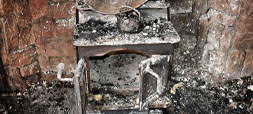
Belinda Jones: I think the biggest thing for me is it was never on my radar to do, but you just jump in and you overlay fire investigation methodology and ventilation fuels and so forth, and you just apply it to whatever you're looking at. And it can be a heavy machine, it can be a small machine, it can be a different building or a different concept, or a boat or something like that. And generally for me, the biggest lesson is don't be afraid of actually stepping outside of your comfort zone to look at a fire that you normally wouldn't look at. So if you're fully focused on structures, I would look at marine fires, like boat fires and so forth, just overlay what you've learnt in that respect, because it is the same. I call it same-same, but different. So just don't worry too much, just ask a lot of questions. Be open to asking a lot of questions. And if you've got a buddy that you can call and talk about it with, we really have a collective knowledge in the business and we share that knowledge quite freely. And just trying to find those people that you can talk to about it if you've got any question. And honestly, learn on the fly, work out how to learn on the fly. Because this job is all about the curve ball that's thrown you, that you then have to bone up really fast on wood stove fires or something like that. All of a sudden you get three in a row and you just go, "Okay, I'm just doing a deep dive into wood stove fires this week." So take that attitude and just run with it because it can take you in really crazy cool places.

Rod Ammon: Yeah, I guess it's better than a repetitive indoor job at a desk, no question about that. I had one thing I had forgotten to ask you and I was about to wrap up, but I'm going to ask you anyway. Electrical, any lithium ion power sources starting to be used in the mining industry or in any of these large vehicles?

Belinda Jones: Be surprised, there's so much remote work, like remote controlled cars that are happening and batteries. Yes, they are coming in the mining sector. Whole fleets are going to be transitioned across to being remote, not even having a driver. They've got these NASA control centers with cameras and everywhere, telemetry everywhere, and they're starting to actually transition across to not using human operators, having remote controlled operation of these trucks, but also battery operated trucks because the diesel cost is huge. So yeah, watch this space, they are in the process of transitioning.

Rod Ammon: And what's that going to mean? I mean, when you talk about surface temperature, what you talk about is so interesting to me. I'm going to try to wrap this up, but the surface temperature of these motors, engines that you're dealing with, and you talk about 160C or 350 Fahrenheit for most of our audience, is that going to change with the electric? And what do you see happening down the road with these?

Belinda Jones: Well, electric, firstly, generally only two or three things will happen with them and the worst is a battery failure. So the temperature on the battery cars, to me, isn't as nearly as expensive, or sorry, not as expensive, as high as what the operating temperature of a diesel engine would be. So firstly, the temperature would be less. There would be less fluids unless you've got hydraulics, so the hydraulics, moving the buckets and the booms. If they can get the energy output on a battery to actually do a haul of five tons of coal up a hill, I don't see that the temperature would be a lot. I think it's more the battery chemistry and the failures because it's a sort of risk and more reward with battery. You've got generally a low risk with lithium battery fires, but the fires that occur are horrific. So if you did have a fire, you might have less of them, but the actual fire event would be 10 times worse than what a normal truck fire would be because the lithium involved with coal would probably cause a fire that would not just burn for days, it might burn for weeks and then ignite the coal bed. So I'm not sure, I really don't know. I haven't done a lithium truck fire for a mine.

Rod Ammon: I was thinking that a lot of the temperature that you're talking about was being built up by friction, but it's purely that that high temperature was from the motors, which I guess ultimately is friction. I don't think there's anything we missed, but well, I feel like for a podcast, we got a whole lot done today. Is there anything you want to get across?

Belinda Jones: No.

Rod Ammon: I'm so grateful.

Belinda Jones: Yeah, no. I mean, as I said, just my big learning is be prepared to learn on the fly and be okay with that. Be okay with being uncomfortable in a situation where you don't know every machine because you're never going to know every machine, because everything's different. So just be okay with being uncomfortable is my biggest thing with fire investigation, because you are always going to learn something.

Rod Ammon: You've got incredible knowledge, BJ, and some wonderful experiences that you've shared. I'm grateful and I'm sure a lot of the people in the audience will be grateful too, so we appreciate your time. I hope you'll stay safe out there and thanks again from everybody.

Belinda Jones: No problem. Thanks, Rod.

Rod Ammon: You be well.

Belinda Jones: You, too.

Rod Ammon: Cheers. CFITrainer.net released a new module at the end of 2025 called Origin and Cause Hypothesis Testing Methods. This module is the second in a two-part series on origin and cause hypothesis testing. The first module, Fundamentals, explains what a hypothesis is, its roles in the scientific method, how to develop hypotheses for fire or explosion origin and cause, how to apply analytical testing to select a final hypothesis, and how to describe hypothesis testing in the Origin and Cause Report. The second module, Methods, tackles deciding what tests to conduct, when to conduct them, who should conduct them and how to conduct them. Both modules are available now. You may have noticed a few subtle changes to the available programs display related to modules that are part of a sequence, like these two Origin and Cause Hypothesis Testing modules. CFITrainer.net has very slightly renamed some of the sequence modules so they appear in order both alphabetically and numerically within the sequence. We've also added a naming and numbering system for these sequences. Look at the bottom of the available program's boxes, and if a module is part of a sequence, you'll see the sequence name and a number in bold type. The number is the recommended order for taking the modules in that sequence. For example, the listing for the basic electricity module says Electrical Systems One at the bottom, which means it is the first module in the electrical system series, which has four modules total. These notations can help you find modules related to the same main topic and know which order to take them in. This IAAI CFITrainer.net podcast is brought to you by the International Association of Arson Investigators and is made possible with funding provided by the Fire Prevention and Safety Grant from the Assistance to Firefighters Grant Program administered by the Federal Emergency Management Agency of the US Department of Homeland Security. Support also comes from the Global IAAI Membership Network, the Bureau of Alcohol, Tobacco, Firearms and Explosives, Strategic Partners, and voluntary online donations from CFITrainer.net users and podcast listeners. Thanks for joining us today on the podcast. Stay safe, we'll see you next month. For the International Association of Arson Investigators and CFITrainer.net, I'm Rod Ammon.

2026
ITC Preview with President David Bridges - ITC Preview with President David Bridges
Large Compartment Fire Dynamics With Michael Rushton - With us today is Michael Rushton, a Professional Engineer and Certified Fire and Explosion Investigator with over 15 years of public and private fire investigation experience.
Marine Fires with Adam Holloway - Today, we’re diving into marine fire investigation with Adam Holloway. Some pretty high profile incidents have been in the news, including the line-of-duty deaths of two Newark, NJ Fire Department firefighters aboard a docked cargo ship loaded with over a thousand vehicles and eleven people hospitalized for smoke inhalation when a fan on a Navy ship malfunctioned.
Fire Fatality Stories with Dr. Elayne Pope - Dr. Pope is here to share cases in which fire effects, patterns, and evidence associated with human bodies made a critical difference in origin and cause determination.
IAAI ITC 2025 Preview with Trace Lawless - IAAI ITC 2025 PREVIEW WITH TRACE LAWLESS
Fire Investigator Behavioral Health with Captain Michael Brewer - What can fire investigators do to help themselves and each other stay mentally healthy given the difficult and sometimes emotionally challenging work they do?
IAAI Investigator of the Year Case Study - This month, the CFITrainer.Net podcast welcomes Captain Chase Hawthorne of the Louisiana Office of State Fire Marshal to talk about the bizarre case that won him the 2024 IAAI Investigator of the Year Award.
News Roundup: March 2024 - News Roundup - March 2024
Discussing Mentorship from Both the Mentor and Mentee Perspectives with Steve Avato - We discuss mentorship, from both the mentor and mentee perspectives, with Steve Avato, retired ATF Supervisory Special Agent CFI and Fire Marshal Captain with the Loudoun County Virginia Fire Marshal’s Office.
A CONVERSATION WITH SPECIAL AGENT ADAM ST. JOHN AND CAPTAIN CRAIG MATTHEWS - Today, we’re taking a deep dive into fires where the ignition was associated with CSST — that’s corrugated stainless steel tubing.
Laboratory Analysis of Fatty Acids, Oils, and Alcohols with Laurel Mason and Doug Byron - Today, we’re talking about using a lab in your investigations. More specifically, we are going to talk to two experienced forensic scientists about analysis of fatty acids, oils, and alcohols.
The Role of Metallurgical and Materials Science in Fire Origin and Cause Determination. - We’ve got something new and pretty interesting for you today — a closer look at the role of metallurgical and materials science in fire origin and cause determination. Our guide into this world is Larry Hanke.
What's new at the National Fire Academy - A conversation with Kevin Oliver on what’s new at the National Fire Academy.
2022 IAAI Investigator of the Year - Today we're talking with Fire Arson Investigator Nicole Brewer of Portland Fire and Rescue in Oregon. Investigator Brewer was named the IAAI Investigator of the Year in 2022
Multi Unit Multi Fatality Fires - This month, we’re tackling a tough topic on the CFITrainer.Net podcast.
NFPA 1321 is coming in 2023. Are you ready? December 2022 - In 2023, NFPA will release a new standard, NFPA 1321: Standard for Fire Investigation Units. We preview this standard on the newest episode of the CFITrainer.Net podcast.
Spoliation: What You Don't Know Can Jeopardize Your Investigation November 2022 - Attorney Chris Konzelmann Discusses Lessons Learned from Recent Litigation
The Internet of Things: September 2022 - Welcome to the CFITrainer.Net podcast. Today, we're talking about the Internet of Things. You're going to learn what that is and why it's an important investigative tool you might not be using.
News Roundup: July 2022 - This month on a new episode of the CFITrainer.Net podcast, we’re talking about fascinating news that’s crossed our feed recently.
June 2022 - On this month’s CFITrainer.Net podcast, we're going to get into an issue that seems to be increasing in regularity, and that's warehouse fires.
Fire Investigator Health and Safety: March 2022 - This month on a new episode of the CFITrainer.Net podcast, Dr. Gavin Horn, Research Engineer at UL's Fire Safety Research Institute, and Jeff Pauley, Chair of the IAAI’s Health & Safety Committee, discuss the latest research on fire investigator health and safety.
NFPA 1321: New NFPA Standard Affecting Fire Investigation Units: January 2022 - On this month’s CFITrainer.Net podcast, we talk with Randy Watson, chair of the technical committee for NFPA 1321: Standard for Fire Investigation Units.
December 2021 - On this month’s CFITrainer.Net podcast, we look back at 2021 and how CFITrainer.Net evolved to meet the challenges of the COVID-19 pandemic and rapidly changing technology.
October 2021 - Welcome to the CFITrainer.Net Podcast. It's been a while since we've done a news round up so today we're covering some new research and fire investigation cases.
Fire as a Cover for Murders and Gender Reveal Fires: September 2021 - This episode we talk to Texas Ranger Sergeant Drew Pilkington about incendiary fires as a cover for murder and we discuss a tragic quadruple domestic violence homicide.
May 2021 - As part of National Arson Awareness Week, CFITrainer.Net has a new podcast exploring the week's theme, "Arson During Civil Unrest."
December 2020 - On this podcast we talk to Bobby Schaal about the new Fire Investigation for Fire Officer certificate and then we offer a brief update on an investigation in Stowe, Vermont.
August 2020 - This month we talk to a legend in the fire investigation field, Dr. Quintiere, sometimes known as Dr. Q. He has a rich experience in the fire service dating back to the 70’s, and he is working on fire in micro-gravity today.
July 2020 - July '20 IAAI & CFITrainer Fire Investigator Podcasts. In this new episode of the CFITrainer.Net podcast, Scott Bennett, talks about the fascinating case he and Mark Shockman worked that won them the IAAI Investigator of the Year Award. You won't want to miss our conversation. And, new IAAI President Rick Jones stops by to discuss what he is excited about for IAAI's growth this coming year — there are a lot of innovative and valuable initiatives on the way.
June 2020 - June '20 IAAI & CFITrainer Fire Investigator Podcasts. In this month's podcast we interview Doug Byron, President and Senior Forensic Chemist from the FAST lab about fats and oils and spontaneous combustion, and how they are involved in fire investigation. After our interview with Doug, we offer some thoughts on your job and the COVID-19 situation.
May 2020 - May '20 IAAI & CFITrainer Fire Investigator Podcasts. Join us this month for a new podcast where we talk briefly about online learning that is available and then we speak with Dr. Peter Mansi, Past President of the IAAI.
April 2020 - April '20 IAAI & CFITrainer Fire Investigator Podcasts. This month on the Podcast we interview President Barry M. Grimm from the IAAI and talk to Wayne Miller, Author of "Burn Boston Burn -The largest arson case in the history of the country.
March 2020 - March '20 IAAI & CFITrainer Fire Investigator Podcasts. This month on the Podcast we talk about some resources for COVID, updates from the IAAI and talk with a fire Marshall in New Hampshire about challenges in their region related to Sober Homes.
February 2020 - February '20 IAAI & CFITrainer Fire Investigator Podcasts. This month’s podcast follows along with our technology theme. We look at social media’s effect on some fire investigations and then we talk with Mike Parker about his work with social media while at the LA County Sheriff’s Department.
January 2020 - January '20 IAAI & CFITrainer Fire Investigator Podcasts. This month’s podcast gives you updates on Australia’s wild fires and an investigation and arrest tied to a large New Jersey fire. We also talk with Zach McCune from Rolfe’s Henry about a case study and course that he and Shane Otto will be leading at ITC this year. Zach talks about an arson fraud case and how spoofing and masking technologies were used to frame an innocent mother and perpetuate an arson fraud.
December 2019 - December '19 IAAI & CFITrainer Fire Investigator Podcasts. In under ten minutes this podcast offers a review of 2019 milestones and new content and features that you might have missed. We also give you a quick preview of what to expect in 2020.
November 2019 Podcast - November '19 IAAI & CFITrainer Fire Investigator Podcasts. This month we learn about two new technology solutions being studied for fire investigation and then we visit with Lester Rich from the National Fire Academy
October 2019 Podcast - October '19 IAAI & CFITrainer Fire Investigator Podcasts. In this podcast episode, we’re back for the second part of the CCAI live burn training event — the actual burn and post-fire.
September 2019 Podcast - September '19 IAAI & CFITrainer Fire Investigator Podcasts. This month we travel to San Luis Obispo where we were hosted by the California chapter of the IAAI (CCAI). We had a rare opportunity to experience what it’s like to set up this training and experience a wildland burn in California. There was a lot to learn!
August 2019 Podcast - August '19 IAAI & CFITrainer Fire Investigator Podcasts. This month's CFITrainer.Net podcast is under 15 minutes and offers information about fires in electric vehicles and what you need to know.
May 2019 Podcast - May '19 IAAI & CFITrainer Fire Investigator Podcasts. In this month's CFITrainer.Net podcast, you'll hear from ATF Special Agent Chad Campanell, who will discuss how ATF can assist state and local fire investigators with training and investigations, ATF resources available to fire investigators, and ATF's support of CFITrainer.Net. Also, we summarize the final report of a multi-fatality fire at a senior living community in Pennsylvania, where ATF cooperated with state and local investigators to reach conclusions.
April 2019 Podcast - April '19 IAAI & CFITrainer Fire Investigator Podcasts. There are two new additions to CFITrainer.Net! A new podcast with Dan Madrzykowski from UL speaking about ventilation and Fire Flow, and a new module called “Fire Flow Analysis”.
March 2019 Podcast - March '19 IAAI & CFITrainer Fire Investigator Podcasts. This month's podcast includes updates from the IAAI related to the election, the upcoming ITC, and a new website specifically about evidence collection. After the updates, you will also hear some news stories related to fire investigation.
February 2019 Podcast - February '19 IAAI & CFITrainer Fire Investigator Podcasts. This month take 10 mins and hear some fire investigation and IAAI news.
January 2019 Podcast - January '19 IAAI & CFITrainer Fire Investigator Podcasts. This month we’re looking back on some of the biggest issues in fire investigation in 2018.
November 2018 Podcast - November '18 IAAI & CFITrainer Fire Investigator Podcasts. This month we talk with Jeff Pauley from the IAAI’s Health and Safety Committee. Jeff is an IAAI-CFI and the Chairman of the Health and Safety Committee. In this podcast, he talks about ways to reduce exposure to carcinogens related to fire investigation. By listening, you will learn about ways to reduce your risks, learn about new resources that are available to assist you, and research that is coming soon.
October 2018 Podcast - October '18 IAAI & CFITrainer Fire Investigator Podcasts. This month meet and learn about IAAI’s new Executive Director, Scott Stephens and plans for the future. After that interview, hear some wild stories from the national news related to fire investigation.
September 2018 News Roundup - September '18 IAAI & CFITrainer Fire Investigator Podcasts.
Short stories related to fire investigation - June '18 IAAI & CFITrainer Fire Investigator Podcasts. Join us for a brief Podcast that includes five minutes of short stories related to fire investigation.
What you need to know about Arson Awareness week - April '18 IAAI & CFITrainer Fire Investigator Podcasts. This month we welcome Tonya Hoover, the Superintendent of the National Fire Academy. Superintendent Hoover came to the NFA with more than 20 years of experience in local and state government, most recently as the California State Fire Marshal.
Growing pot and earning Bitcoin can start fires? - March '18 IAAI & CFITrainer Fire Investigator Podcasts. In this month’s podcast, hear a story about how the Bitcoin business might be causing fires? What similarities are there between Pot growers and now Bitcoin miners?
Training related to wildland fire investigation - February '18 IAAI & CFITrainer Fire Investigator Podcasts. This month’s podcast highlights new training related to wildland fire investigation featuring an interview with Paul Way, and this year’s International Training Conference. We also have a pretty wild story before we wrap up. Birds starting fires?
Smart homes and digital data gathering issues - December '17 IAAI & CFITrainer Fire Investigator Podcasts. In this podcast, we discuss two topics on the technology and forensics cutting edge. Michael Custer of Kilgore Engineering, Inc. and retired Special Agent Tully Kessler share some knowledge and give us a taste of the classes that they will be presenting at ITC 2018.
Discussion with Writer Monica Hesse - September '17 IAAI & CFITrainer Fire Investigator Podcasts. In this podcast, you will hear some great news related to the IAAI and CFITrainer.Net and then we have an interview with Monica Hesse, the writer of a new book called "American Fire: Love, Arson, and Life in a Vanishing Land."
Discussion with Criminalist- John DeHaan - June '17 IAAI & CFITrainer Fire Investigator Podcasts. This month on the CFITrainer.Net podcast, we talk to Criminalist, fire investigation expert and Author of "Kirk’s Fire Investigation", John DeHaan.
The Ghost Ship - May '17 IAAI & CFITrainer Fire Investigator Podcasts. For this podcast, we hear from a retired Captain of the Long Beach Fire Department, Pat Wills. Pat has been in the fire service for 37 years. He has been a leader and an investigator, now he is an educator speaking around the country about the importance of code enforcement.
Fast Podcast about ITC! - March '17 IAAI & CFITrainer Fire Investigator Podcasts. This month we talk to David Bridges about what to expect at ITC and the training you won’t want to miss.
CFITrainer Podcast- A profile with an IAAI-CFI® - February '17 IAAI & CFITrainer Fire Investigator Podcasts. Join us this month for our podcast as we interview IAAI member and CFI, Jeff Spaulding from Middletown, Ohio. Jeff talks about his work in both the public and private sector and then he shares an interesting story about how a pacemaker is helping in an investigation.
An interview with Dr. James Quintiere - December '16 IAAI & CFITrainer Fire Investigator Podcasts. In a discussion with Dr. James Quintiere, we learn about some of his work in fire sciences, a bit about his research, his opinions related to the World Trade Center investigation and what he thinks is important to fire investigation as a scholarly leader in our field.
Fire Investigation After the Flood Podcast - November '16 IAAI & CFITrainer Fire Investigator Podcasts. This month we talk to Dan Hebert, an IAAI, CFI about "How Floods affect Fire Investigation."
September 2016 CFITrainer.Net Podcast - September '16 IAAI & CFITrainer Fire Investigator Podcasts. This month we talk about the recent changes in the FAA's regulations for commercial and public sector use of UAS or "Drones".
August 2016 CFITrainer.Net Podcast - August '16 IAAI & CFITrainer Fire Investigator Podcasts. This month we talk to Jessica Gotthold about the Seaside Heights fire in NJ from 2013
July 2016 CFITrainer.Net Podcast - July '16 IAAI & CFITrainer Fire Investigator Podcasts. This month we talk to Fire Marshall, Ken Helms of the Enid, OK. Fire Department about his team winning the Fire Investigator of the Year award.
March 2016 CFITrainer.Net Podcast - March '16 IAAI & CFITrainer Fire Investigator Podcasts. This month's fire investigation podcast from the IAAI's CFITrainer.Net focuses on the Youth Firesetting Information Repository and Evaluation System, which is called YFIRES for short.
February 2016 CFITrainer.Net Podcast - February '16 IAAI & CFITrainer Fire Investigator Podcasts. This month's fire investigation podcast from the IAAI's CFITrainer.Net focuses on what you need to do to ensure the integrity of samples sent to the lab. A conversation with Laurel Mason of Analytical Forensic Associates.
September 2015 CFITrainer.Net Podcast - September '15 IAAI & CFITrainer Fire Investigator Podcasts. Our podcast related to the legalization of recreational marijuana and its effect on fire investigation was one of the most popular podcasts ever on CFITrainer.Net. This month’s podcast is a follow up with one of our listeners from California who is an investigator doing training on this very topic.
August 2015 CFITrainer.Net Podcast - August '15 IAAI & CFITrainer Fire Investigator Podcasts. This month's podcast is about NFIRS where we interview the Executive Director of The National Association of State Fire Marshals Fire Research and Education Foundation, Jim Narva.
July 2015 CFITrainer.Net Podcast - July '15 IAAI & CFITrainer Fire Investigator Podcasts. In this special edition of podcast we’re going to meet the newest IAAI Investigator of the Year, Andrea Buchanan.
May 2015 CFITrainer.Net Podcast - May '15 IAAI & CFITrainer Fire Investigator Podcasts. This month's Arson Investigator podcast from IAAI & CFITrainer interviews Jason McPherson from MSD Engineering to talk about some of these new technology tools.
April 2015 CFITrainer.Net Podcast - April '15 IAAI & CFITrainer Fire Investigator Podcasts. This month's Arson Investigator podcast from IAAI & CFITrainer interviews Dave Perry, a lawyer in Colorado discussing what fire chiefs, fire investigators, and the legal system are seeing in a state with legalized cannabis in regard to fire cause involving marijuana.
February 2015 CFITrainer.Net Podcast - Feb '15 IAAI & CFITrainer Fire Investigator Podcasts. This month's Arson Investigator podcast from IAAI & CFITrainer interviews Mike Schlatman and Steve Carman who are both successful fire investigators and now business owners who have transitioned from the public to the private sector.
December 2014 CFITrainer.Net Podcast - December '14 IAAI & CFITrainer Fire Investigator Podcasts. This month's podcast interviews Steve Avato from the Bureau of Alcohol, Tobacco, Firearms and Explosives explaining the process of elimination and how it is a critical part of the scientific method.
June 2014 CFITrainer.Net Podcast - June '14 IAAI & CFITrainer Fire Investigator Podcasts. This month's podcast interviews the 2014 Investigator of the Year.
April 2014 CFITrainer.Net Podcast - April '14 IAAI & CFITrainer Fire Investigator Podcasts. This month's podcast interviews with Don Robinson, Special Agent in Charge with the Bureau of Alcohol, Tobacco, Firearms and Explosives. Currently stationed at the National Center for Explosives Training and Research, located at the Redstone Arsenal in Huntsville, Alabama.
January 2014 CFITrainer.Net Podcast - January '14 IAAI & CFITrainer Fire Investigator Podcasts. This month's podcast takes a look inside the process of revising NFPA 921 and NFPA 1033.
October 2013 CFITrainer.Net Podcast - October '13 IAAI & CFITrainer Fire Investigator Podcasts. This month's podcast focuses on the fire research work of Underwriters’ Laboratories, better known as UL.
February 2013 CFITrainer.Net Podcast - February '13 IAAI & CFITrainer Fire Investigator Podcasts. This month we have an interview with George Codding who returned from a recent trip to Saipan and gives us a closer look at the international activities of the International Association of Arson Investigators
Mid Year 2012 CFITrainer.Net Podcast - Mid Year '12 IAAI & CFITrainer Fire Investigator Podcasts. This podcast features a mid-year update on the IAAI’s new initiatives and ways for you to get more involved with the organization.
September 2012 CFITrainer.Net Podcast - September '12 IAAI & CFITrainer Fire Investigator Podcasts. This month's podcast features an in-depth look at the recent live-burn fire experiments exercise conducted on Governor’s Island, New York by the New York City Fire Department, the National Institute of Standards and Technology, Underwriters Laboratory, and the Trust for Governor’s Island.
August 2012 CFITrainer.Net Podcast - August '12 IAAI & CFITrainer Fire Investigator Podcasts. This is a special edition of the CFITrainer.Net podcast previewing the ITC 2013. There’s a new name for the Annual Training Conference from the IAAI now called the International Training conference.
April 2012 CFITrainer.Net Podcast - April '12 IAAI & CFITrainer Fire Investigator Podcasts. This month's podcast features an interview with Chief Ernest Mitchell, Jr., the US Fire Administrator. Also we will discuss the upcoming ATC, Annual Training Conference, from the IAAI about to happen in Dover, Delaware.
March 2012 CFITrainer.Net Podcast - March '12 IAAI & CFITrainer Fire Investigator Podcasts. This month's podcast features an interview with ATF Special Agent Billy Malagassi out of the Tulsa, OK Field Office about investigating fires in clandestine drug labs. We also report on NIST’s findings in the Charleston Sofa Super Store fire and IAAI’s Evidence Collection Practicum.
December 2011 CFITrainer.Net Podcast - December '11 IAAI & CFITrainer Fire Investigator Podcasts. This month's podcast features one of the presenters from this year’s IAAI ATC and see how a single photo broke the Provo Tabernacle fire case.
October 2011 CFITrainer.Net Podcast - October '11 IAAI & CFITrainer Fire Investigator Podcasts. This month's podcast features an interview with Deborah Nietch, the new Executive Director of IAAI.
July 2011 CFITrainer.Net Podcast - July '11 IAAI & CFITrainer Fire Investigator Podcasts. This month's podcast features an interview with Tom Fee discussing details of investigating wildland fires.
June 2011 CFITrainer.Net Podcast - June '11 IAAI & CFITrainer Fire Investigator Podcasts. This month's podcast features a lot of exciting things that are happening at CFITrainer.Net
May 2011 CFITrainer.Net Podcast - May '11 IAAI & CFITrainer Fire Investigator Podcasts. This month highlights the IAAI ATC in Las Vegas and the third installment in the "It Could Happen to You" series.
ATC 2011 CFITrainer.Net Podcast - This podcast discusses the upcoming IAAI Annual Training Conference and National Arson Awareness Week.
April 2011 CFITrainer.Net Podcast - April '11 IAAI & CFITrainer Fire Investigator Podcasts. This podcast announces the release of the program, The First Responder’s Role in Fire Investigation, which teaches first responders how to make critical observations and take important scene preservation actions at a fire scene.
March 2011 CFITrainer.Net Podcast - March '11 IAAI & CFITrainer Fire Investigator Podcasts. This month’s podcast features some of the instructors from the upcoming 2011 Annual Training Conference, to provide a preview of the courses they will be presenting.
February 2011 CFITrainer.Net Podcast - February '11 IAAI & CFITrainer Fire Investigator Podcasts. This month’s podcast features an update on fire grants and an interview with Steve Austin
January 2011 CFITrainer.Net Podcast - January '11 IAAI & CFITrainer Fire Investigator Podcasts. This month’s podcast features the release of the new edition of Fire Investigator: Principles and Practice to NFPA 921 and 1033, new flammability requirements from UL for pre-lit artificial Christmas trees and a growing fire problem in Dubai with factories turned into worker dormitories.
December 2010 CFITrainer.Net Podcast - December '10 IAAI & CFITrainer Fire Investigator Podcasts. This month’s podcast focuses on home candle fires, lightning punctures in gas piping, and respiratory diseases in the fire services.
November 2010 CFITrainer.Net Podcast - November '10 IAAI & CFITrainer Fire Investigator Podcasts. This month’s podcast features research findings for structural stability in engineered lumber by UL, the ban on antifreeze in residential sprinkler systems, and the National Highway Traffic Safety Administration’s investigation of Jeep Grand Cherokee fuel tanks.
October 2010 CFITrainer.Net Podcast - October '10 IAAI & CFITrainer Fire Investigator Podcasts. This month’s podcast features high-profile fire cases, why people leave stovetop cooking unattended and how new sensors under development may improve fire research.
September 2010 CFITrainer.Net Podcast - September '10 IAAI & CFITrainer Fire Investigator Podcasts. This month’s podcast features how to use the ATF’s Bomb Arson Tracking System, IAAI Foundation grants, electrical fires and indoor marijuana cultivation.
August 2010 CFITrainer.Net Podcast - August '10 IAAI & CFITrainer Fire Investigator Podcasts. This month’s podcast focuses on social media as a fire investigation tool, a potential problem with modular home glued ceilings and research from Underwriters Laboratories on the effects of ventilation on structure fires.
July 2010 CFITrainer.Net Podcast - July '10 IAAI & CFITrainer Fire Investigator Podcasts. This month’s podcast is a roundtable on some of the latest research and technical activities that impact fire investigation, featuring Daniel Madrzykowski (moderator), Steven Kerber, and Dr. Fred Mowrer.
June 2010 CFITrainer.Net Podcast - June '10 IAAI & CFITrainer Fire Investigator Podcasts. This month’s podcast discusses career advancement, budget cuts and their impact on fire investigation, and the 2010-2016 ATF Strategic Plan.
ATC 2010 CFITrainer.Net Podcast - Follow-up and Interviews from Orlando. Learn about the conference, hear what attendees had to say.
May 2010 CFITrainer.Net Podcast - May '10 IAAI & CFITrainer Fire Investigator Podcasts. The second in our safety series called "It Could Happen To You." Our Long-Term Exposure roundtable is moderated by Robert Schaal.
April 2010 CFITrainer.Net Podcast - April '10 IAAI & CFITrainer Fire Investigator Podcasts. The first of our two-part safety series called "It Could Happen To You." Our roundtable is moderated by Robert Schaal.
March 2010 CFITrainer.Net Podcast - March '10 IAAI & CFITrainer Fire Investigator Podcasts. This month’s podcast features a conversation about legislative affairs affecting the fire service with Bill Webb, Executive Director of the Congressional Fire Services Research Institute.
February 2010 CFITrainer.Net Podcast - February '10 IAAI & CFITrainer Fire Investigator Podcasts. This month’s podcast features our interview with a commercial kitchen’s fire expert about what you need to know when you work a commercial kitchen fire.
January 2010 CFITrainer.Net Podcast - January '10 IAAI & CFITrainer Fire Investigator Podcasts. This month’s podcast features a look at preliminary research on corrosion caused by Chinese drywall, a new database focused on fires in historic buildings, a warning on blown-in insulation, and the launch of the new firearson.com web site.
December 2009 CFITrainer.Net Podcast - December '09 IAAI & CFITrainer Fire Investigator Podcasts. This month’s podcast features cooking fires, highlights of the International Code Council’s Annual Meeting on code requirements, including requiring residential sprinkler systems, and an easy way to keep up with recalls from the US Consumer Product Safety Commission.
November 2009 CFITrainer.Net Podcast - November '09 IAAI & CFITrainer Fire Investigator Podcasts. This month’s podcast features chimney fires, including recent news on surgical flash fires, a proposed national arsonist registry, lightning research and an innovation in personal protective equipment.
October 2009 CFITrainer.Net Podcast - October '09 IAAI & CFITrainer Fire Investigator Podcasts. This month’s podcast is devoted to Fire Prevention Week.
September 2009 CFITrainer.Net Podcast - September '09 IAAI & CFITrainer Fire Investigator Podcasts. This month’s podcast features the relationship between climate conditions and fire risk, new research on formulating fireproof walls and the latest in IAAI news.
August 2009 CFITrainer.Net Podcast - August '09 IAAI & CFITrainer Fire Investigator Podcasts. This month takes a look at the dangerous combination of summer heat and oily rags, the rise in vacant home fires, and preview research underway on Australia’s devastating "Black Saturday" brush fires.
July 2009 CFITrainer.Net Podcast - July '09 IAAI & CFITrainer Fire Investigator Podcasts. This month features a look at outdoor grill fires, a fatal fire at a homeless camp in Southern NJ, new NIST research on human behavior during building fires, and IAAI news.
June 2009 CFITrainer.Net Podcast - June '09 IAAI & CFITrainer Fire Investigator Podcasts. This month’s podcast features live reports from the 2009 IAAI Annual Training Conference held in May.
May 2009 CFITrainer.Net Podcast - May '09 IAAI & CFITrainer Fire Investigator Podcasts. This podcast is dedicated to National Arson Awareness Week.
April 2009 CFITrainer.Net Podcast - April '09 IAAI & CFITrainer Fire Investigator Podcasts. This month’s podcast features the NFPA 921 chapter on marine fire investigations and the myth and reality of static electricity as a source of ignition.
March 2009 CFITrainer.Net Podcast - March '09 IAAI & CFITrainer Fire Investigator Podcasts. This month focuses on the rise of the hybrid vehicle and what its unique engineering means for the investigation of vehicle fires, the rash of devastating arson fires in Coatesville, Pennsylvania from December 2008 to February 2009, and news from IAAI.
January 2009 CFITrainer.Net Podcast - January '09 IAAI & CFITrainer Fire Investigator Podcasts. This month’s podcast focuses on the deepening financial crisis in the US and arson for profit fires, how going green may pose a fire hazard and see how rope lighting may be a source of ignition, and IAAI’s Expert Witness Courtroom Testimony course.
December 2008 CFITrainer.Net Podcast - December '08 IAAI & CFITrainer Fire Investigator Podcasts. This month’s podcast features Christmas tree fires, changes to critical fire investigation publications, the weak economy’s impact on home fires, wind’s effect on structure fires, and ATC 2009.