Tuesday, September 07, 2010 | The online resource for training fire investigators
Fire Investigator Certified Training - CFITrainer
brought to you by:
International Association of
Arson Investigators
brought to you by IAAI
CFITrainer Users Sign In
E-Mail Address:
Password:  
Register Today for CFITrainer.net

Content on this page requires a newer version of Adobe Flash Player.

Get Adobe Flash player

CFI Podcast

The IAAI and cfitrainer.net present these podcasts with a focus on issues relating to fire investigation. With expertise from around the world, the International Association of Arson Investigators and its 22,000 members of cfitrainer.net have prepared these podcasts to bring more information and electronic media to fire investigators looking for training, education and general information about fire investigation. Topics include recent technologies, issues in the news, training opportunities, changes in laws and standards and any other topic that might be of interest to a fire investigator or industry professional affected by fire. Information is presented using a combination of original stories and interviews with scientists, leaders in fire investigation from the fire service and the law enforcement community.


In order to subscribe to the Podcast, you need to have iTunes installed on your computer. iTunes is available as a free download from Apple here

Other Episodes
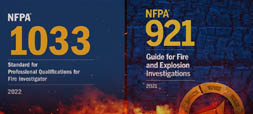
December 2008 CFITrainer.Net Podcast - This month’s podcast features Christmas tree fires, changes to critical fire investigation publications, the weak economy’s impact on home fires, wind’s effect on structure fires, and ATC 2009.

January 2009 CFITrainer.Net Podcast - This month’s podcast focuses on the deepening financial crisis in the US and arson for profit fires, how going green may pose a fire hazard and see how rope lighting may be a source of ignition, and IAAI’s Expert Witness Courtroom Testimony course.

March 2009 CFITrainer.Net Podcast - This month focuses on the rise of the hybrid vehicle and what its unique engineering means for the investigation of vehicle fires, the rash of devastating arson fires in Coatesville, Pennsylvania from December 2008 to February 2009, and news from IAAI.

April 2009 CFITrainer.Net Podcast - This month’s podcast features the NFPA 921 chapter on marine fire investigations and the myth and reality of static electricity as a source of ignition.

May 2009 CFITrainer.Net Podcast
June 2009 CFITrainer.Net Podcast - This month’s podcast features live reports from the 2009 IAAI Annual Training Conference held in May.

July 2009 CFITrainer.Net Podcast - This month features a look at outdoor grill fires, a fatal fire at a homeless camp in Southern NJ, new NIST research on human behavior during building fires, and IAAI news.

August 2009 CFITrainer.Net Podcast - This month takes a look at the dangerous combination of summer heat and oily rags, the rise in vacant home fires, and preview research underway on Australia’s devastating "Black Saturday" brush fires.

September 2009 CFITrainer.Net Podcast - This month’s podcast features the relationship between climate conditions and fire risk, new research on formulating fireproof walls and the latest in IAAI news.
October 2009 CFITrainer.Net Podcast - This month’s podcast is devoted to Fire Prevention Week.

November 2009 CFITrainer.Net Podcast - This month’s podcast features chimney fires, including recent news on surgical flash fires, a proposed national arsonist registry, lightning research and an innovation in personal protective equipment.

December 2009 CFITrainer.Net Podcast - This month’s podcast features cooking fires, highlights of the International Code Council’s Annual Meeting on code requirements, including requiring residential sprinkler systems, and an easy way to keep up with recalls from the US Consumer Product Safety Commission.

January 2010 CFITrainer.Net Podcast - This month’s podcast features a look at preliminary research on corrosion caused by Chinese drywall, a new database focused on fires in historic buildings, a warning on blown-in insulation, and the launch of the new firearson.com web site.

February 2010 CFITrainer.Net Podcast - This month’s podcast features our interview with a commercial kitchen’s fire expert about what you need to know when you work a commercial kitchen fire.

March 2010 CFITrainer.Net Podcast - This month’s podcast features a conversation about legislative affairs affecting the fire service with Bill Webb, Executive Director of the Congressional Fire Services Research Institute.

April 2010 CFITrainer.Net Podcast - The first of our two-part safety series called "It Could Happen To You." Our roundtable is moderated by Robert Schaal.

May 2010 CFITrainer.Net Podcast - The second in our safety series called "It Could Happen To You." Our Long-Term Exposure roundtable is moderated by Robert Schaal.

ATC 2010 CFITrainer.Net Podcast - Follow-up and Interviews from Orlando. Learn about the conference, hear what attendees had to say.

June 2010 CFITrainer.Net Podcast - This month’s podcast discusses career advancement, budget cuts and their impact on fire investigation, and the 2010-2016 ATF Strategic Plan.

July 2010 CFITrainer.Net Podcast - This month’s podcast is a roundtable on some of the latest research and technical activities that impact fire investigation, featuring Daniel Madrzykowski (moderator), Steven Kerber, and Dr. Fred Mowrer.


Transcript

Welcome to the May 2009 CFITrainer.Net Podcast. This podcast is dedicated to National Arson Awareness Week, which runs May 3-9, 2009. The week is sponsored by the U.S. Fire Administration in partnership with the Coalition Against Insurance Fraud, The Bureau of Alcohol, Tobacco, Firearms, and Explosives, and the International Association of Arson Investigators. In this podcast, we will touch on different aspects of this year’s National Arson Awareness Week theme: Arson for Profit.

Defined broadly, arson for profit is the intentional setting of a fire for the purpose of financial gain. This financial gain can take many forms, including collecting an insurance settlement, reducing financial losses, disposing of depreciated assets, or putting a competitor out of business. The annual losses from arson are staggering. In 2007, The Insurance Information Institute found that arson destroyed nearly $900 million in insured property and killed 295 civilians in the United States. The Media Kit for National Arson Awareness Week includes a checklist of questions for investigators to use when determining if an arson for profit might have occurred. The Media Kit and checklist are available free on www.usfa.fema.gov.

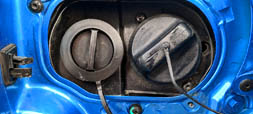
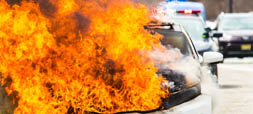
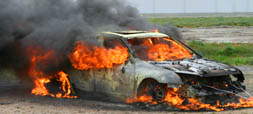
We begin with a rise in vehicle arsons for profit. According to CBS News, setting vehicles on fire has become so common in the desert outside Las Vegas that the Las Vegas police patrol daily by helicopter to find the burned out hulks. And, the police report, many of the cars are late model, some nearly brand new, and almost all set on fire by owners trying to collect insurance settlements. The telltale sign that the arsonists aren’t professionals? The burned cars aren’t stripped of the valuable parts that professional thieves would never leave behind. Regular people, strapped by the brutal economy, are resorting to desperate measures. Sharp jumps in vehicle arson caseloads have been reported in many states, including New Jersey, New York, Texas, California, Nevada, Ohio, South Carolina, Utah, and Arkansas. The Coalition Against Insurance Fraud reports that the economic downturn is causing an increase in the number of vehicle arsons, as desperate car owners seek to unload vehicles they can no longer afford. An October 2008 report from the National Insurance Crime Bureau details the rise in vehicle "give-ups" and positively correlates this rise with rising gas prices.

Police and fire investigators should be on the lookout for some of the warning signs of vehicle arson fraud, including:

  • Owner behind and/or habitually late making payments.


  • Vehicle is worth less than the payments owed.


  • Lease is up or almost up and owner has exceeded lease terms, such as mileage allowance.


  • Vehicle has not been stripped of valuable parts, and/or is devoid of personal effects.


  • Vehicle reported "stolen" had an active and working anti-theft device that was not triggered.


  • No signs of forced entry into the vehicle.


  • No damage to the ignition or steering lock.

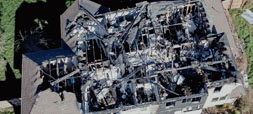
Businesses are also prime targets in arson for profit schemes. The news is awash with stories of big banks, giant retailers, and venerable corporations filing for bankruptcy, going out of business, or being rescued by government bailout. But, in the midst of the current economic crisis, we hear less about the countless thousands of small businesses that are struggling and failing. For a small business, the margin of error is much smaller than a multinational corporation. It often takes very little to push a small business out of business. Some business owners, faced with financial ruin, choose a desperate path: arson for profit.

In January 2009, according to federal authorities, Jorge Gomez Pinto, Sr. chose to solicit individuals to burn down his Mexican restaurant in Weatherfield, TX, rather than see it closed in bad economic times. Unfortunately for him, one of the individuals he solicited was an undercover ATF Special Agent. Pinto stated that he had lost $400,000 and wanted to collect the $500,000 insurance settlement after the fire. Pinto cooked up an alibi complete with a fake heart attack, and eased the hired arsonists’ path with a faulty burglar alarm, a lack of security cameras, a full pre-arson tour of the facility, and two unlocked entry doors. Federal authorities arrested Pinto before he had a chance to follow through on his plan.

In Everett, Washington, authorities say that Mirza Akram, owner of a spice store, burned his store to collect an insurance settlement that would ease his financial problems. The store’s revenue had fallen 70% in the past year. As a cover, Akram spray-painted the business with anti-Arab epithets before setting the fire, hoping authorities would think the arson was a hate crime. He also planted a story with nearby business owners that he had been harassed by customers earlier that summer. But it was for naught. Not only was Akram mistaken about his name being on the insurance policy, federal authorities swiftly arrested him.

Some business owners don’t target their own companies, but a competitor instead. When his Atlanta strip club Platinum 21 started losing business to Club Onyx, general manager Boyd Smith and manager Howard Thrower paid a security guard to set fire to their competitor. The fire closed Club Onyx for six months and caused $1.8 million in damages and lost business. Smith was convicted in February 2009. Thrower and Sandeo Dyson, the security guard, pled guilty.

These three examples illustrate the variety of business arson for profit schemes. There can be many different investigative avenues to pursue, but some of the common red flags in this type of case include:

  • Financial problems, such as drop in revenue, cash flow issues, overdue invoices, unpaid or late payroll, loan or line of credit debt, unpaid or late rent or mortgage


  • Disagreement between partners


  • Outdated, worthless, or low value equipment or inventory


  • Property upkeep problems, code violations, fines, zoning law changes, tax increases


  • Missing inventory or equipment


  • Overstated business value


  • Insurance coverage increases, especially in the absence of a documented increase in business value or risk


  • Pending litigation or bankruptcy


  • Prior insurance claims and fire losses


  • Property or business for sale


  • Back taxes


  • Liens


  • Expected items of value missing (removed before the fire)

The third major form of arson for profit involves homeowners setting fire to their houses. For more information on this aspect of arson for profit, please listen to the January 2009 CFITrainer.Net podcast, which contains a feature on this topic.

Finally, let’s turn our attention to news from IAAI.

Time is running short to register for the IAAI Annual Training Conference in Arlington, Texas from May 17th - 23rd, 2009. More than 300 investigators from around the world have already registered for this event, which is the premier networking and professional development opportunity for fire, arson, and explosives investigators. Presenters include: Dr. John DeHaan, Dr. David Icove, Dr. David Howitt, Daniel Madrzykowski of NIST and the renowned Texas Rangers criminal investigation experts. To register, please visit firearson.com or contact Deb Bell at 410-451-3473.

Voting for the election of IAAI officers and board members as well as an amendment to the IAAI bylaws has begun and will run through noon central daylight time on Tuesday, May 19th. You can vote online in the members section of the IAAI website at www.firearson.com.

IAAI is establishing a Speakers Bureau of members who are willing to volunteer their time to assist in the professional development of fire and arson investigator colleagues around the nation and the world. To register, you need to be a member of IAAI. Applications are available in the members-only section of the IAAI website, firearson.com

That concludes this CFITrainer.Net podcast dedicated to National Arson Awareness Week, May 3-9. Take time out this month to do something to raise arson awareness in your community or improve your arson for profit investigation skills. Visit usfa.fema.gov for more information on how you can participate. We’ll see you next month.

CFITrainer Upcoming Programs
Explosion Dynamics
CFITrainer Email Alerts
E-Mail Address:
CFITrainer Promo Video
Promo Video
Play Now
CFITrainer Poll
How did you hear about CFITrainer.net?


Learn About
Meeting In A Box
Click Here