Tuesday, September 07, 2010 | The online resource for training fire investigators
Fire Investigator Certified Training - CFITrainer
brought to you by:
International Association of
Arson Investigators
brought to you by IAAI
CFITrainer Users Sign In
E-Mail Address:
Password:  
Register Today for CFITrainer.net

Content on this page requires a newer version of Adobe Flash Player.

Get Adobe Flash player

CFI Podcast

The IAAI and cfitrainer.net present these podcasts with a focus on issues relating to fire investigation. With expertise from around the world, the International Association of Arson Investigators and its 22,000 members of cfitrainer.net have prepared these podcasts to bring more information and electronic media to fire investigators looking for training, education and general information about fire investigation. Topics include recent technologies, issues in the news, training opportunities, changes in laws and standards and any other topic that might be of interest to a fire investigator or industry professional affected by fire. Information is presented using a combination of original stories and interviews with scientists, leaders in fire investigation from the fire service and the law enforcement community.


In order to subscribe to the Podcast, you need to have iTunes installed on your computer. iTunes is available as a free download from Apple here

Other Episodes
December 2008 CFITrainer.Net Podcast - This month’s podcast features Christmas tree fires, changes to critical fire investigation publications, the weak economy’s impact on home fires, wind’s effect on structure fires, and ATC 2009.

January 2009 CFITrainer.Net Podcast - This month’s podcast focuses on the deepening financial crisis in the US and arson for profit fires, how going green may pose a fire hazard and see how rope lighting may be a source of ignition, and IAAI’s Expert Witness Courtroom Testimony course.

March 2009 CFITrainer.Net Podcast - This month focuses on the rise of the hybrid vehicle and what its unique engineering means for the investigation of vehicle fires, the rash of devastating arson fires in Coatesville, Pennsylvania from December 2008 to February 2009, and news from IAAI.

April 2009 CFITrainer.Net Podcast - This month’s podcast features the NFPA 921 chapter on marine fire investigations and the myth and reality of static electricity as a source of ignition.

May 2009 CFITrainer.Net Podcast - This podcast is dedicated to National Arson Awareness Week.

June 2009 CFITrainer.Net Podcast - This month’s podcast features live reports from the 2009 IAAI Annual Training Conference held in May.

July 2009 CFITrainer.Net Podcast - This month features a look at outdoor grill fires, a fatal fire at a homeless camp in Southern NJ, new NIST research on human behavior during building fires, and IAAI news.

August 2009 CFITrainer.Net Podcast - This month takes a look at the dangerous combination of summer heat and oily rags, the rise in vacant home fires, and preview research underway on Australia’s devastating "Black Saturday" brush fires.

September 2009 CFITrainer.Net Podcast - This month’s podcast features the relationship between climate conditions and fire risk, new research on formulating fireproof walls and the latest in IAAI news.

October 2009 CFITrainer.Net Podcast - This month’s podcast is devoted to Fire Prevention Week.

November 2009 CFITrainer.Net Podcast - This month’s podcast features chimney fires, including recent news on surgical flash fires, a proposed national arsonist registry, lightning research and an innovation in personal protective equipment.

December 2009 CFITrainer.Net Podcast - This month’s podcast features cooking fires, highlights of the International Code Council’s Annual Meeting on code requirements, including requiring residential sprinkler systems, and an easy way to keep up with recalls from the US Consumer Product Safety Commission.

January 2010 CFITrainer.Net Podcast - This month’s podcast features a look at preliminary research on corrosion caused by Chinese drywall, a new database focused on fires in historic buildings, a warning on blown-in insulation, and the launch of the new firearson.com web site.

February 2010 CFITrainer.Net Podcast - This month’s podcast features our interview with a commercial kitchen’s fire expert about what you need to know when you work a commercial kitchen fire.

March 2010 CFITrainer.Net Podcast - This month’s podcast features a conversation about legislative affairs affecting the fire service with Bill Webb, Executive Director of the Congressional Fire Services Research Institute.

April 2010 CFITrainer.Net Podcast - The first of our two-part safety series called "It Could Happen To You." Our roundtable is moderated by Robert Schaal.

May 2010 CFITrainer.Net Podcast - The second in our safety series called "It Could Happen To You." Our Long-Term Exposure roundtable is moderated by Robert Schaal.

ATC 2010 CFITrainer.Net Podcast - Follow-up and Interviews from Orlando. Learn about the conference, hear what attendees had to say.

June 2010 CFITrainer.Net Podcast
July 2010 CFITrainer.Net Podcast - This month’s podcast is a roundtable on some of the latest research and technical activities that impact fire investigation, featuring Daniel Madrzykowski (moderator), Steven Kerber, and Dr. Fred Mowrer.


Transcript

Welcome to IAAI’s June 2010 CFITrainer.Net Podcast. This month’s podcast features career advancement. We’ll discuss how fire investigators can think strategically about their careers, how to chart a career path, the role of continuing education and certification in the profession, as well as what options are available after retirement. Our two news stories are also related to career advancement: we’ll hear more about budget cuts impacting fire investigators and the ATF Strategic Plan for 2010-2016.

We begin with the topic of career advancement. Here to talk with us about what all fire investigators should be doing to grow and advance in their profession is Steve Austin.

Q: Why do fire investigators need to think strategically about their careers?

STEVE AUSTIN: Well the whole role of a fire investigator and how they fit into the scheme of things in terms of a career inside the fire service&helip; and any public sector, and even as private fire investigators has really changed over the years, and in order to advance, they need to have sufficient training and a broadening of their skill set, and the way that’s done is, of course, the subject of a lot of work that’s been done by the IAAI in making a consistent and meaningful training opportunity available to a broad group of folks.

Q: So how does an investigator, in your mind, chart a career path or set goals and achieve them?

STEVE AUSTIN: I suspect now that a young person entering into the career of fire investigator would either come into a private sector agency that investigates fires normally either from the insurance industry or a company that provides services to the legal community or an insurance company or perhaps for another governmental entity, and there would be an entry point there for someone that is beginning their career.

On the other side of the house, in the public sector, oftentimes people in law enforcement and in the fire service get on board either as a sworn police officer or federal law enforcement person or a firefighter. Then they find themselves in a position where they can move into fire investigation within the agency for which they now work.

So you actually have this parallel opportunity for people on both sides to come into the field of practice. What I think has been very helpful is that a young person today graduating from a technical school or from a degree granting institution can actually come forward and find an employer who’s willing to hire them and train them to be a fire investigator in the private sector, and as a matter of economics, Rod, public sector jobs now are very difficult to come about. In fact, in the fire service and some law enforcement, there is actual layoffs taking place due to the economy.

So it would be very advantageous for a young person to really consider coming into the private sector, and now there are tools that are available for them for career enhancement and training such as CFITrainer.

Q: So, on this younger person or somebody who is starting fresh into fire investigation, what should I be thinking about as continuing education or certification? How does that play into my career advancement?

STEVE AUSTIN: In almost every area now in the public and private sector, almost all the trades, there is a growing need for certified folks, and so this is something that’s been relatively new in fire investigation, this is something that we have not had where people can actually seek certification to be a certified fire investigator. And it’s a very, very positive step, and again, I don’t want to be too much of a homer here, but the IAAI has really led the way in providing that certification for fire investigators, and in fact, the IAAI is the professional association for all fire investigators, whether they be in the public or private sector.

Q: What are some of the specific ways that a fire investigator can get continuing education?

STEVE AUSTIN: Well continuing education now in fire investigation is much easier to find than it has been in the past, and we can start out with what’s offered locally. Many community colleges now have education training leading a degree or a certificate in various aspects of fire investigation. Certainly there are four-year degree granting institutions that offer accredited college degrees in this area. There are even advanced degrees available in certain educational institutions in this country.

Now in addition to that, there are lots and lots of good training opportunities provided in the police and fire services through various seminars that are offered, again, by the IAAI. The various chapters of the IAAI around the world do some excellent work in having one, two day seminars, weeklong seminars in many, many cutting edge issues in fire investigation.

Q: Are there other opportunities that you see out there? State fire academies that are out there or other places you think we should mention?

STEVE AUSTIN: Well state fire academies and local metro fire academies certainly have picked up the pace on fire investigation training, and many state programs offer certified programs that are either accredited by the ProBoard or IFSAC, the two accreditation bodies in North America. Those courses are great courses, and oftentimes, because they’re provided by state institutions, they are really tailored many times towards state legislation, state codes and they can be very, very helpful. If you’re working in that jurisdiction and they spend a lot of time with you on the arson legislation in your particular jurisdiction it could be very, very helpful to you.

Q: What certifications are available for someone who is developing their career or who is trying to move into being the better fire investigator, the person who is most prepared to go to court or to take an investigation from start to finish through the courtroom?

STEVE AUSTIN: Well Rod, I don’t think you can underestimate the value of a four-year degree from an accredited college or university, and I see that now in terms of who is being hired in the private and the public sector. And while it may be still possible in some locations to be hired into a public sector job or a private sector job without a four-year degree, this is a profession and a four-year degree is really the basis to get you started.

Q: What are some of the specific certifications that somebody can achieve during their career that are going to help them move ahead?

STEVE AUSTIN: Well advanced degree work. I say that because I look at successful CEOs, chiefs of police, fire chiefs and also folks in business, and most, if not all, of those people have taken advanced degree work. Now, those same folks are also looking at becoming certified fire investigators. That is really the ultimate for a fire investigator to have a CFI designation.

Q: What are some of my other options for career after I’ve retired?

STEVE AUSTIN: Well many public sector folks can leave the public sector in 20 to 25 to 30 years and can seek employment with an insurance company or a private cause and origin firm, a consulting firm, in which they can take their skill set that they’ve honed over the many years in the public sector, their contacts, and their just general understanding of the business of fire investigation to a private employer who can benefit from that level of experience.

You know, we’re an entrepreneurial country here, and I really have a lot of admiration for some of these folks who retire and open up - hang up their own shingle and open up their own shop and become small business persons and go out and offer services that are needed in a private sector, and we see a lot of independent cause and origin investigators come out and go to work for themselves.

Q: What are some of the opportunities for me to give back, to assist all these folks that need this better education?

STEVE AUSTIN: Well, again, the IAAI provides a great opportunity for seasoned fire investigators for folks that are at the pinnacle of their career or have recently retired or started to slow down to provide training opportunities as instructors in many, many of these seminars and classes that we’ve talked about.

Q: Steve, thanks for being with us today, and we really appreciate the insight and your contribution.

STEVE AUSTIN: Rod, it’s my pleasure, and I just want to urge everyone to take advantage of that training when it comes available, and it’s so easy now because of CFITrainer.

Now, for some headlines making news in fire investigation. With many U.S. states facing major budget crisis and citizens protesting increased taxes at every level, what are some of the potential effects of belt-tightening on fire investigators and the investigations they conduct? One state, Oklahoma, is about to find out. Budget shortfalls in the State Fire Marshal’s Office have reduced staff by 20% and forced new policies into effect, including up to 72 hours for an agent to respond to a fatality, critical injury and arson investigation requests. There are also significant impacts on building inspections. Local officials are expressing concern about the possible effects of these new realities, including the logistics of securing a scene for up to three days before an investigator arrives, the potential for evidence to be degraded due to the delay, and the possibility that state fire investigators may not respond at all to low priority cases like brush fires and fires with minimal property damage. Regarding low priority cases where the State Fire Marshal’s Office may not respond, Oklahoma Fire Marshal Robert Doke was quoted in The Oklahoman saying, "The sheriff will just have to do a report and mark it as cause accidental or unknown." Usually, a three person team from the Fire Marshal’s office will respond to a fire fatality, but with the budget cuts all three might not be able to respond, says Doke, and “it may be that we have a homicide where we are not able to determine the cause of the fire. I hope that never happens, but I would say it's a strong possibility."
Moving on to our next story, the Bureau of Alcohol, Tobacco, Firearms, and Explosives has released its 2010-2016 Strategic Plan. The plan details ATF’s positioning of strategic assets, development of certain investigative areas, research priorities, and provision of training to law enforcement partners. Strategic Goal 3 covers Explosives, Bombs, and Bombings. Strategic Goal 4 covers Fire and Arson. The fire and arson portion of the document includes strategies for enhancing training programs for the fire service and public safety community and increasing fire and arson research and development. The full Strategic Plan is available on ATF.gov. The direct URL is provided on this podcast’s web page.

ATF Strategic Plan - Fiscal Years 2010-2016 http://www.atf.gov/publications/general/strategic-plan/2010-2016-strategic-plan.html

That concludes this IAAI CFITrainer.Net podcast. We’ll see you again next month.

CFITrainer Upcoming Programs
Explosion Dynamics
CFITrainer Email Alerts
E-Mail Address:
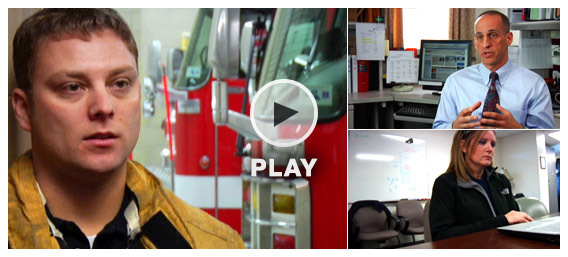
CFITrainer Promo Video
Promo Video
Play Now
CFITrainer Poll
Does your employer require continued fire investigation training?

Learn About
Meeting In A Box
Click Here