Tuesday, September 07, 2010 | The online resource for training fire investigators
Fire Investigator Certified Training - CFITrainer
brought to you by:
International Association of
Arson Investigators
brought to you by IAAI
CFITrainer Users Sign In
E-Mail Address:
Password:  
Register Today for CFITrainer.net

Content on this page requires a newer version of Adobe Flash Player.

Get Adobe Flash player

CFI Podcast

The IAAI and cfitrainer.net present these podcasts with a focus on issues relating to fire investigation. With expertise from around the world, the International Association of Arson Investigators and its 22,000 members of cfitrainer.net have prepared these podcasts to bring more information and electronic media to fire investigators looking for training, education and general information about fire investigation. Topics include recent technologies, issues in the news, training opportunities, changes in laws and standards and any other topic that might be of interest to a fire investigator or industry professional affected by fire. Information is presented using a combination of original stories and interviews with scientists, leaders in fire investigation from the fire service and the law enforcement community.


In order to subscribe to the Podcast, you need to have iTunes installed on your computer. iTunes is available as a free download from Apple here

Other Episodes
December 2008 CFITrainer.Net Podcast - This month’s podcast features Christmas tree fires, changes to critical fire investigation publications, the weak economy’s impact on home fires, wind’s effect on structure fires, and ATC 2009.

January 2009 CFITrainer.Net Podcast
March 2009 CFITrainer.Net Podcast - This month focuses on the rise of the hybrid vehicle and what its unique engineering means for the investigation of vehicle fires, the rash of devastating arson fires in Coatesville, Pennsylvania from December 2008 to February 2009, and news from IAAI.

April 2009 CFITrainer.Net Podcast - This month’s podcast features the NFPA 921 chapter on marine fire investigations and the myth and reality of static electricity as a source of ignition.

May 2009 CFITrainer.Net Podcast - This podcast is dedicated to National Arson Awareness Week.

June 2009 CFITrainer.Net Podcast - This month’s podcast features live reports from the 2009 IAAI Annual Training Conference held in May.

July 2009 CFITrainer.Net Podcast - This month features a look at outdoor grill fires, a fatal fire at a homeless camp in Southern NJ, new NIST research on human behavior during building fires, and IAAI news.

August 2009 CFITrainer.Net Podcast - This month takes a look at the dangerous combination of summer heat and oily rags, the rise in vacant home fires, and preview research underway on Australia’s devastating "Black Saturday" brush fires.

September 2009 CFITrainer.Net Podcast - This month’s podcast features the relationship between climate conditions and fire risk, new research on formulating fireproof walls and the latest in IAAI news.

October 2009 CFITrainer.Net Podcast - This month’s podcast is devoted to Fire Prevention Week.

November 2009 CFITrainer.Net Podcast - This month’s podcast features chimney fires, including recent news on surgical flash fires, a proposed national arsonist registry, lightning research and an innovation in personal protective equipment.

December 2009 CFITrainer.Net Podcast - This month’s podcast features cooking fires, highlights of the International Code Council’s Annual Meeting on code requirements, including requiring residential sprinkler systems, and an easy way to keep up with recalls from the US Consumer Product Safety Commission.

January 2010 CFITrainer.Net Podcast - This month’s podcast features a look at preliminary research on corrosion caused by Chinese drywall, a new database focused on fires in historic buildings, a warning on blown-in insulation, and the launch of the new firearson.com web site.

February 2010 CFITrainer.Net Podcast - This month’s podcast features our interview with a commercial kitchen’s fire expert about what you need to know when you work a commercial kitchen fire.

March 2010 CFITrainer.Net Podcast - This month’s podcast features a conversation about legislative affairs affecting the fire service with Bill Webb, Executive Director of the Congressional Fire Services Research Institute.

April 2010 CFITrainer.Net Podcast - The first of our two-part safety series called "It Could Happen To You." Our roundtable is moderated by Robert Schaal.

May 2010 CFITrainer.Net Podcast - The second in our safety series called "It Could Happen To You." Our Long-Term Exposure roundtable is moderated by Robert Schaal.

ATC 2010 CFITrainer.Net Podcast - Follow-up and Interviews from Orlando. Learn about the conference, hear what attendees had to say.

June 2010 CFITrainer.Net Podcast - This month’s podcast discusses career advancement, budget cuts and their impact on fire investigation, and the 2010-2016 ATF Strategic Plan.

July 2010 CFITrainer.Net Podcast - This month’s podcast is a roundtable on some of the latest research and technical activities that impact fire investigation, featuring Daniel Madrzykowski (moderator), Steven Kerber, and Dr. Fred Mowrer.


Transcript

Welcome to the January 2009 CFITrainer.Net Podcast. In this edition, we’ll explore how the deepening financial crisis in the United States may affect the incidence of arson for profit fires. We’ll also learn about going green and how that may pose a fire hazard and see how rope lighting may be a source of ignition. We’ll also preview IAAI’s new course on Expert Witness Courtroom Testimony.

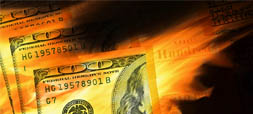
We’ll begin with the story dominating our news - the recession causing serious repercussions throughout the United States. The national unemployment rate has soared 7.2% and is closer to 10% in some states. Massive job cuts by major employers are being announced every day. Banks are in a federal bailout. U.S. home values, the biggest source of equity for most American families, are in freefall and for the third quarter of 2008, Zillow.Com reported that U.S. home values continued to slide for the seventh consecutive quarter, declining 9.7 percent from a year ago, and falling 12.8 percent since the market peak in 2006. Some areas, such as Southern California and Florida, have seen home values decline 20-30% in one year. Additionally, one-third of homes sold in the past 12 months sold for a loss, and 14.3 percent of all homeowners have negative equity. Will these harsh realities make arson-for-profit increasingly attractive to desperate property owners?

With us today to discuss that question is Joseph Toscano, a certified fire investigator with more than 30 years experience, a former member of the NFPA 921 Committee, and a member of the Board of Directors for the Insurance Committee for Arson Control.

Interviewer: How are you doing Joe?

Joseph Toscano: Very well thank you.

Interviewer: Good to have you with us. I will jump right in and ask what does a typical arson for profit scheme look like?

Joseph Toscano: There really isn’t a typical scheme. Desperate times cause people to take desperate measures. The issues today are issues that I don’t think we’ve had to deal with, at least anyone in this business today had to deal with in their entire working careers. We have what amounts to the perfect storm occurring in most communities. We have people who are on the verge of losing their homes, and many who have already lost their homes. For those who are on the verge, that’s where the arson for profit issue is the strongest. Once a home is foreclosed, there is no longer an insurable interest and really no reason for anyone to commit an arson for profit. However, what occurs at that point is that these homes become vacant and accessible properties and they become targets for vandals, for kids in neighborhoods who are looking for something to do and find themselves inside a home that they have no right to be in, and from there we have problems. We have communities who are experiencing a lack of funding to fund more inspections of these properties, to fund investigative units, and so the perfect storm continues to where arson for profit is not just the problem, it’s arson as a result of these properties being vacant and accessible.

Interviewer: Is there a link between the mortgage crisis, economic downturn and the increase in arson for profit?

Joseph Toscano: Certainly there is. It’s a common sense link that when situations like this, again, as I said, that the desperation situations arise, that people are going weigh what their options are in terms of getting out from under the financial crisis, and arson is going to be one of those things that people are going to consider. Hopefully, because of the emphasis that’s been placed on arson, both in a public safety perspective as well as a prosecutorial perspective, that we have taken a much harder line with arsonists than 25 and 30 years ago, hopefully, people will weigh the risk of apprehension and not choose arson as a way out, but many do.

Interviewer: Understood. So if money may be the motive, what clues might an investigator find in the documentation? Where should he or she look?

Joseph Toscano: I used to tell investigators to always just follow the money, and I guess if you take that in the reverse, it’s follow where the money has gone. We always start with the insurance policy. If someone is committing arson for profit, many of the clues that an investigator will be looking for can be found in the documentation that exists in the insurance company. Understand that there are really two silos of information in the insurance industry. There is an underwriting file and a claims file. What we’re seeing now is we’re seeing properties that may have been purchased for $600,000 and insured for $600,000, which have now dropped in value to $450,000. Mortgages on these properties that may exceed the actual value of those properties right now. So you’re looking at an underwriting file that may tell you a bit about what that property was worth and what it was represented to be at the time of purchase. In the claims file there are a number of documents that are very important. One of those documents is called a proof of loss. In a proof of loss, a person, an insured, will represent all of the items that were damaged or destroyed as a result of the fire. Oftentimes in these documents people who are committing an arson for profit have a tendency to embellish the property that was damaged or destroyed as a result of the fire. It’s also important for an investigator to understand all of the documents that may be in a claims file and an underwriting file. I’m going to stick with the claims file for a couple of minutes. In a claims file you’ll have something called a notice of loss and essentially it’s what an insured represents to the insurance carrier occurred to trigger the insurance policy to take effect. In other words, we’ve had a loss, there’s been a fire, I have an insurance policy that covers that fire and I’m going to be making a claim against that policy. Oftentimes in that notice of loss will be representations that that person makes about what happened and what they know about what happened and what caused that incident. It’s important because people who have committed arson for profit have had a very difficult time giving consistent information to the different entities that will be investigating that loss. What I mean by that is they may give different information to an insurance investigator and different information to a fire investigator from a local jurisdiction, different information to an investigator from a state police agency, and again, if you compare this information oftentimes you find very strong inconsistencies. Another document in the claims file that’s very valuable in the investigative process is called an examination under oath, and that’s when an insured under oath gives a dissertation as to what happened on the evening or the day of the event and what their knowledge is of certain happenings on that day and things that led up to and followed the incident. In other words, it’s a sworn statement given to the insurance industry and oftentimes, again, it contains inconsistent information. So the bottom line here is that it’s very, very important for the public safety investigators to understand what kind of information exists inside both the claims and underwriting file and how they can access that information and what to look for once they get it.

Interviewer: So what are the key points of cooperation with the mortgage holding institution and the insurance company? What do you want to know and how can you get access to that information?

Joseph Toscano: Well that’s an excellent question. In fact, it’s one of the biggest problems today in many cities is that it’s very difficult to find out who is holding a mortgage on a particular property. That kind of information is generally not listed in the files at City Hall in terms of ownership of a property. And in fact, when many of these mortgages were attained by the homeowners, they were quickly sold by the originating bank and it’s very difficult to follow where that mortgage went. So there really is no direct nexus between many of these mortgage companies and the insurance industry. That area of communication is lacking, and what has been happening is as these properties fall into foreclosure and become vacant it’s very difficult for municipalities to determine who is responsible for the property at that point, and so assessing penalties or holding people responsible to secure these properties and maintain the property until they’re sold again is near difficult, and in fact, it’s nearly impossible. That creates a serious problem as well to investigators who, if there is a fire in these properties, to determine who may have an insurable interest, and again, who the responsible parties are for the property.

Interviewer: So what do we do? So what do we do? I’ve heard you talk about prevention and preparation, planning with different cities.

Joseph Toscano: If we create legislation locally, statewide or even nationally that says if you are going to assume a mortgage, if the mortgage is going to be sold, that that kind of information should be registered at the local jurisdiction so that in the event there’s a foreclosure, in the event there’s a problem with the property, in the event there’s a fire, that kind of information in terms of who holds the mortgage and the history of ownership and transfer of that property will be on file, and if the property does become vacant, there would be somebody accountable for maintaining that property, for securing that property and from preventing the kinds of situations that are occurring today.

Thanks a lot for your time Joe. We really appreciate you taking your time to work with us here at CFITrainer.Net to do these podcasts, to get in touch with the folks who have the experience that you do and communicate it to all the fire investigators that log on with us each day. Well, let’s move on.

Going green is the trend that’s sweeping the nation. One of the first steps suggested to consumers is switching from incandescent to fluorescent bulbs to save energy and money. Electronic dimmer switches can also save energy. But, many consumers are not aware that these two energy-saving measures don’t always mix: Not all fluorescent bulbs can be used with dimmer switches. Dimmer switches work by turning the bulb on and off faster than your eye can perceive. The action causes problems with many of the CFL bulbs. When the dimmer is in the lowered position, the non-dimmable CFL will continue to try to light, which can cause the ballast to overheat and possibly catch fire. In at least one documented case in Cumberland, MD, a CFL-dimmer combination was determined to be the cause of a devastating house fire.

Some CFL bulbs do work with dimmers, but many consumers are not aware that they need to purchase a special bulb rated for dimmers. In fact, different CFL bulbs are designed for different uses. Consumers often do not read the fine print on the box to determine what application the CFL is suitable for. Therefore, fire investigators should be aware that CFL bulbs, despite their "cool touch," can be the cause of fire when they are not used as intended. Thorough investigation of any CFL bulb in the area of origin should be part of the investigator’s standard protocol.

Due to its flexibility and ease of installation, rope lighting has become very popular for landscaping and interior design use. The October 2008 issue of Fire and Arson Investigator included an examination of rope lighting as a source of ignition. The article dispels the notion that rope lights are simply a string of .5 watt light bulbs that could never overheat. Instead, the authors argue that rope lights should be treated as a "heat tape" that dissipates heat at a particular watt density and also emits photons. Therefore, rope lights should be subject to the same cautions as heat tapes. The article identifies a serious potential issue with rope lighting: the practice of coiling up unused length and stashing it in ways that can trap heat, especially when under insulation. The authors have also seen, through experience, that installers may be unfamiliar with the UL requirements, that installers may use a longer light length than required, that older product that does not meet current standards is still being sold and installed, and that distributors continue to sell splicing kits even though UL and the manufacturer prohibit them. The authors also conducted tests that demonstrate how improperly installed rope lights can cause fires. The full findings of this rope lighting research can be found in the October 2008 issue of Fire and Arson Investigator.
We end our podcast today with a few reminders of upcoming IAAI training opportunities.

  • "Investigations of Electronic & Appliance Related Fires, A Scientific Approach" will be held Tuesday February 17, 2009 through Thursday February 19, 2009 in Glen Cove, New York. This session covers topics such as appliance fire investigation in the legal arena; electrical heat generation mechanisms; design, construction and maintenance of appliances; and forensic examination in fire investigation.
  • "Effective Investigation and Testimony" will be held Tuesday February 24, 2009 in Phoenix, Arizona. Topics will include protecting an investigation from spoliation, improper methodology, and alternatives theories; the latest scientific and legal challenges to fire scene investigations; the skills needed to be an effective expert witness; and how to present demonstrative evidence.
  • The IAAI Training Conference will also be held in May, it’s May 17th to the 23rd, 2009 in Arlington Texas. Early registration offers the advantage of a discounted registration fee and an opportunity to get lodging in the host hotel, the Sheraton Arlington.

For more information and registration forms, call the IAAI office at 1-800-468-4224 or visit www.firearson.com and select "Training Calendar."

That’s all for this month’s IAAI podcast. Have a good day.

CFITrainer Upcoming Programs
Explosion Dynamics
CFITrainer Email Alerts
E-Mail Address:
CFITrainer Promo Video
Promo Video
Play Now
CFITrainer Poll
What area of fire investigation are you most interested in?


Learn About
Meeting In A Box
Click Here