Welcome to IAAI’s December 2009 CFITrainer.Net Podcast. It’s the holiday season and families are gathering to celebrate with food and fun. Unfortunately, it’s also the time of year when the incidence of cooking fires peak, and we’ll take a look at that. Then, we have highlights of the actions taken at the International Code Council’s Annual Meeting on code requirements, including requiring residential sprinkler systems. Finally, we have an easy way to keep up with recalls from the US Consumer Product Safety Commission.
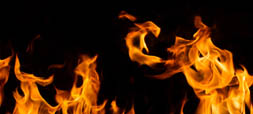
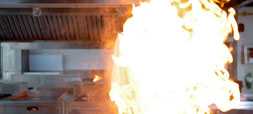
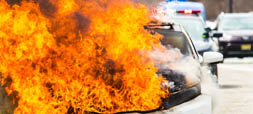
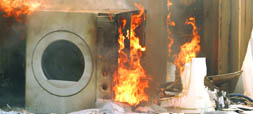
Let’s begin with cooking fires. The incidence of cooking fires is highest during the holiday season, when more families are at home cooking meals. In fact, Thanksgiving Day is the peak day for home cooking fires. According to the NFPA’s 2005 statistics, approximately 150,000 home structure fires involving cooking equipment occur every year, causing nearly 500 civilian deaths, 4500 injuries, and over $870 million in property damage. These cooking fires account for 40% of all home structure fires. With us today to talk about the investigation of cooking fires is Mike Schlatman. Mike is a past President of the IAAI and he is now the President of Fire Consulting and Case Review International. Thanks for joining us, Mike.

MIKE: Thank you.
Q: What are some of the common ways or scenarios in which home cooking fires are ignited?
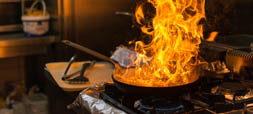
MIKE: By far the method of ignition is the ignition of grease and oil. People have a tendency to use grease or oil, and whether it’s new or used – and that makes a difference on the ignition temperature and hot surface ignition temperature – they will ignite the, they’ll turn on the burner and they will walk away from it. They’ll be distracted by children, television, telephone calls and in some cases even go to sleep leaving the grease or oil on the range. That, of course, heats to its ignition temperature and the fire ensues. There are other things such as leaving paper towels and other things on top of the range. You’d be surprised at how many people actually come in everyday and put their groceries or cardboard boxes or other combustibles on top of ranges and they leave them there and they eventually become ignited.
Q: Are there common indicators one sees in a fire caused by cooking? If so, what are they?
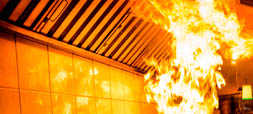
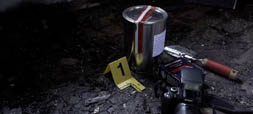
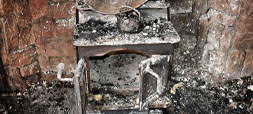
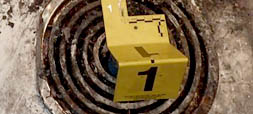
MIKE: Primarily you’ll see the conductive flame plume pattern, an aero pattern that’s created emanating from the surface of the range upward. The combustibles above it, such as the kitchen cabinetry, will be burned on maybe possibly more on one side than the other. Also oxidation patterns on the range hood should be noted. It may give you the location of the burner on which the fire actually occurred one, on one side or the other. Of course, the consumption of the combustibles on top of the counter on either side of the range will help determine your flame spread scenario, but by far the most frequently found pattern is the bottom of the skillet or pan will display the element, the pattern of an element if it’s an electrical burner and that will show you that the fire had occurred inside the pan and was in, it’s in higher temperature than a normal cooking, and so therefore, the element actually is shown on the bottom of the pan and the pan may be partially melted, but we must always look for the actual skillet or pan involved in the cooking to determine whether or not that pattern exists.
Q: What investigative actions are important when cooking is being considered as a fire cause?
MIKE: Well in every case, we must evaluate the appliance. Were there prior problems reported with the appliance? Was it installed correctly? What was the position of the burner knobs is of primary importance? Even if the plastic knob is melted off, the metal shaft may show you the position of the burner. An exemplar range should be examined when possible. Also, the knobs can be turned on, or buttons, depending on how old the range is, can be turned on accidentally. Were they turned on by someone placing something on the range? Did somebody lean against them? Do they have to be pushed in inward before they can be turned on?
We’ve had many cases where people have accidentally turned on the range knobs in that fashion, or they will accuse dogs and cats of turning on them, turning on the knobs, or by falling burning debris. I have one case where they said that falling burning debris turned on all four burners, which was, of course, inaccurate. And the last thing you must always, if you can, if you have the resources, use engineers to examine the appliances. Electrical engineers may be able to determine whether or not the burner was on at the time of the fire even if the knobs have been destroyed. Of course, you must interview the occupants of the house. What was being prepared? What oil or grease was being used? Was it new or old? Where was the cook at the time of the fire? What were their actions right then? What did they observe at the insipient stage of the fire? Where were the combustibles burning? That might be very important to you. The material that first ignited, that was first ignited must be, let me try that again.
The material that was first ignited must be established. The type of oil or grease will affect, and whether or not it was new or used, will affect its flashpoint and its hot surface ignition temperature. So you must know that. What was their normal cooking practice? Did they usually leave the kitchen while preparing meals? Look at what did they do when they found the fire. People have, and they’ve been terribly injured, by pouring water onto grease fires. Did they pick up the pan? Did they try to take it outside? Did they spill the contents on the floor? All of these things will be very important. So you must verify what they say through the physical evidence.
Thanks, Mike. And, listeners, by the way, you might want to take a listen to last year’s December podcast about Christmas tree fires. Now, let’s take a look at what’s making news in fire investigation this month.
The International Code Council’s Annual Conference took place from October 24th to November 11th. During the Conference, the ICC held Code Development Hearings on the 2009/2010 proposed changes to the International Codes. Many proposals were considered and voted on at this meeting. Here, we look at three topics at these meetings that have been of keen interest to fire investigators. Last year, a residential fire sprinkler requirement for all new homes was added to the International Residential Code. At the October 28th hearing, the ICC’s Residential Building Code Committee rejected a request by the National Association of Homebuilders or NAHB to repeal the residential sprinkler requirement and voted to uphold the requirement. Subsequently, the NAHB invoked a new procedure whereby the membership in attendance at the hearing can overrule the committee. However, the membership in attendance voted to affirm the committee’s decision. Therefore, the residential sprinkler requirement for new homes is scheduled to become effective January 1, 2011 in states that adopt the latest version of the Residential Building Code.
Other highlights from the meeting include:
- Approval of a code change requiring that all smoke alarms be listed and labeled in accordance with UL 217 and installed in accordance with the household fire warning equipment provisions of NFPA 72.
- Approval of a code change requiring basements, habitable attics and every sleeping room to have at least one operable emergency escape and rescue opening. In basements with one or more sleeping rooms, emergency egress and rescue openings will be required in each sleeping room.
A summary of action taken at the ICC Annual Conference is now available at www.iccsafe.org. A full Report of the Public Hearings is now available.
In September and October 2009, the US Consumer Product Safety Commission issued recalls due to fire hazard for products as diverse as snowmobiles, rechargeable batteries, lamps, single meter sockets, DVD players, and industrial band saws. It is crucially important for fire investigators to keep up on recall news as it pertains to potential accidental fire causes. Did you know how easy it is to stay up to date? Well, you can simply go to cpsc.gov and sign up for the CPSC recalls e-mail list. Periodically, summaries of all the CPSC recalls will be sent directly to your email address. It’s a convenient and easy way to stay current on products that can potentially cause a fire.
Finally, we close with news from IAAI. In response to the strong interest in the IAAI Fire Investigation Technician professional credential, the IAAI Board of Directors has extended the special reduced application rate of $70 for IAAI members through May of 2010. Information is available on the IAAI website which is www.firearson.com, or from the IAAI office at 1-800-468-4224.
As the end of the year approaches, IAAI reminds all members that, if you itemize tax deductions, you can save this year by renewing your membership before the end of 2009. IAAI staff will be available through the 31st to process membership applications or you can renew online at firearson.com.
That concludes this IAAI CFITrainer.Net podcast. We’ll see you again next month.